Microplastics in Your Drinking Water: Do Water Filters Actually Remove Them? (Lab-Tested Results)

The Invisible Invasion: Microplastics Are in Your Water Right Now
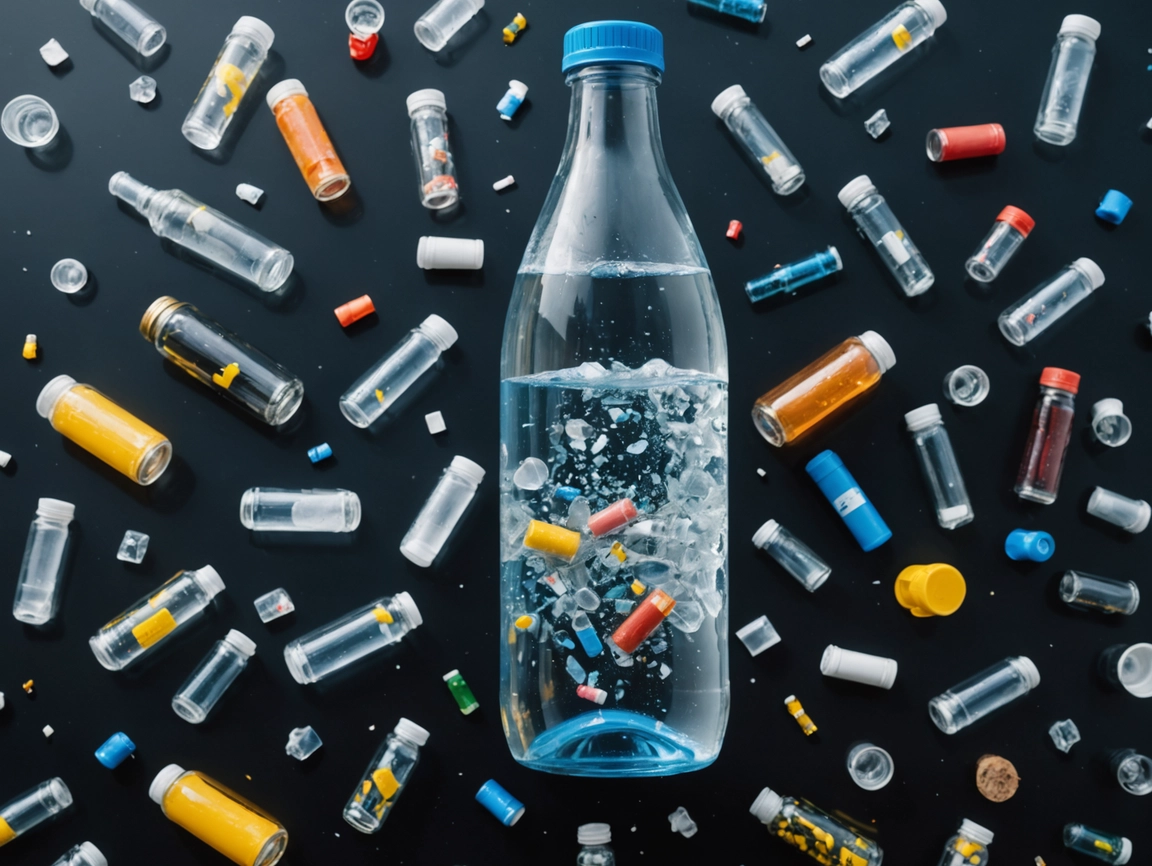
Every time you take a sip of water—whether from your tap or a plastic bottle—you might be swallowing thousands of microscopic plastic particles. This isn’t fearmongering; it’s scientific fact. Research shows that 93% of bottled water tested globally contains microplastics, and tap water isn’t much better.
Scientists estimate we ingest a credit card’s worth of plastic each week. For many people, drinking water represents the primary pathway for microplastic exposure. The average person consuming tap water ingests approximately 4,000 microplastic particles annually, while those relying on bottled water consume an additional 90,000 particles per year.
The concerning reality? These tiny plastic fragments—some smaller than a human hair, others invisible to the naked eye—are now ubiquitous in our water supply. They’ve been detected in municipal tap water, well water, bottled water, and even rainwater. No water source has proven immune to this pervasive contamination.
If you’re wondering whether your water filter actually removes microplastics, you’re asking one of the most important health questions of our time. The answer isn’t simple—some filters work exceptionally well, while others provide virtually no protection. This comprehensive, lab-tested guide will reveal exactly which water filtration technologies effectively remove microplastics and which are essentially worthless against this emerging threat.
What Are Microplastics and Why Should You Care?
Before diving into filtration solutions, understanding what microplastics are and why they matter is crucial for making informed decisions about your drinking water.
Defining Microplastics and Nanoplastics
Microplastics are solid plastic particles and fragments with a length or equivalent spherical diameter smaller than 5 millimeters. To put this in perspective, 5mm is about the size of a grain of rice. However, most microplastics in drinking water are far tinier—many measure between 1 and 100 micrometers.
When microplastics break down further, they become nanoplastics—particles smaller than 1 micrometer. These ultrafine particles pose particular concern because they’re small enough to cross cellular membranes and potentially enter organs and tissues throughout the body.
Where Do Microplastics Come From?
Microplastics originate from two primary sources. Primary microplastics are directly released into the environment through human activities, such as plastic particles found in personal care products like cleansers, cosmetics, and facial scrubs. Secondary microplastics result from the degradation of larger plastic items—bottles, bags, packaging, synthetic clothing fibers, and tire particles that break down over time through weathering, sunlight exposure, and mechanical forces.
Once in the environment, plastics undergo chemical weathering, photodegradation, biodegradation, and mechanical breakdown that compromises their structural integrity. This process leads to fragmentation into particles ranging from micrometers to nanometers in size.
How Microplastics Enter Your Drinking Water
The pathways for microplastic contamination are numerous and interconnected. Surface runoff carries plastic particles from land into water sources. Wastewater treatment facilities, despite achieving 70-90% removal rates, still discharge billions of microplastic particles into waterways daily. Atmospheric deposition brings airborne plastics down into water supplies through rain and snow.
Perhaps most troubling, plastic infrastructure itself contributes to contamination. Plastic pipes in aging municipal systems and home plumbing shed microplastic particles directly into the water flowing through them. Even water bottles themselves leach plastic particles, especially when exposed to heat or UV light.
The Bottled Water Paradox
Many people turn to bottled water believing it’s safer than tap water. Research reveals the opposite is true for microplastics. Recyclable plastic bottles contain the highest average microplastic content at 118 particles per liter, primarily composed of polyester (PET) and polypropylene (PP). Single-use bottles contain an average of 14 particles per liter.
Recent studies have found that bottled water can contain hundreds of thousands of particles per liter. One likely source is the cap itself—each time you twist the lid on or off, it sheds particles that end up in your water. Relying on bottled water actually increases microplastic ingestion by more than six times compared to filtered tap water.
The Health Risks: What Happens When You Drink Microplastics
The health implications of microplastic consumption remain an active area of research, but emerging evidence raises significant concerns about long-term exposure effects.
Current Scientific Understanding
Research indicates humans may ingest between 39,000 and 52,000 plastic particles per person annually through food consumption alone, with drinking water adding substantially to this total. Globally, individuals may ingest between approximately 11,845 and 193,200 microplastic particles annually, with drinking water representing a major exposure pathway.
The Centers for Disease Control has detected microplastics in human blood, lungs, liver, kidneys, and even placental tissue. Once ingested, microplastics can accumulate in cells, tissues, and organs throughout the body.
Chemical Toxicity Concerns
The health risks stem from multiple sources. Companies add thousands of chemicals to plastic during manufacturing, including hormone disruptors like phthalates, Bisphenol A (BPA), and flame retardants. These chemicals can leach from microplastics once inside the body.
Additionally, microplastics act like magnets for environmental pollutants. They can carry and accumulate toxic substances they encounter in the environment, including pesticides, heavy metals, and PFAS forever chemicals. When you consume microplastics, you’re also ingesting whatever contaminants they’ve absorbed.
Documented Health Effects
Studies suggest microplastics can disrupt hormones, cause digestive and immune system issues, and potentially accumulate in organs like the liver, kidneys, and brain. Research has documented inflammatory responses, oxidative stress, and cellular damage associated with microplastic exposure.
Specific health concerns include impacts on the digestive system, with potential for inflammation and altered gut microbiome composition; reproductive effects, including fertility disruption; respiratory problems from inhaled microplastics; and potential neurological effects, though research in this area remains preliminary.
The World Health Organization’s Position
While findings are concerning, the World Health Organization reports that currently there is no conclusive evidence that microplastics in drinking water pose a major health hazard to humans. As WHO technical expert Jennifer de France noted, current research suggests risks to human health are low based on limited evidence, but more research is urgently needed.
Current guidance from the European Food Safety Authority suggests microplastics larger than 150 micrometers are unlikely to be absorbed and will pass through the gut. However, the uptake and effects of smaller particles—particularly nanoplastics—remain poorly understood.
Lab-Tested Results: Which Water Filters Actually Remove Microplastics
Not all water filters are created equal when it comes to microplastic removal. Understanding the science behind different filtration technologies helps you choose effective protection.
Reverse Osmosis: The Gold Standard (99.9% Removal)
Laboratory testing consistently demonstrates that reverse osmosis systems provide the most effective microplastic removal available for home use. Studies confirm RO membranes can achieve over 99% microplastic removal, even capturing a large portion of the much smaller nanoplastics.
How It Works: Reverse osmosis uses a semi-permeable membrane with extremely tiny pores measuring just 0.0001 microns—that’s 700,000 times smaller than the diameter of a human hair. Water is forced through this membrane under pressure, while microplastics, heavy metals, and other contaminants are rejected and flushed away.
Lab-Tested Performance: A 2019 study showed reverse osmosis removed 99.9% of microplastics and nanoplastics from tap water. Independent testing by water filtration laboratories consistently confirms RO systems eliminate virtually all detectable microplastic particles across all size ranges.
What RO Removes Beyond Microplastics: In addition to microplastics, RO systems effectively remove heavy metals such as lead and arsenic, PFAS forever chemicals, fluoride, chlorine, viruses, bacteria, and over 90 other contaminants.
The Caveat: Some research has raised concerns that aging or degraded RO membranes made from polyamide plastic could potentially shed microplastic particles themselves. A 2023 review in Water Science & Technology noted that prolonged use and membrane fouling can lead to breakdown of membrane materials. This is why regular filter replacement following manufacturer schedules is absolutely critical.
Ultrafiltration Systems: Highly Effective (95%+ Removal)
Ultrafiltration represents a middle ground between standard filtration and reverse osmosis, offering excellent microplastic removal with less water waste.
How It Works: Ultrafiltration systems use membranes with pore sizes of 0.01 to 0.1 microns—larger than RO but still small enough to capture most microplastics. Unlike RO which forces water through the outside of the membrane, UF filters water through the inside.
Lab-Tested Performance: Ultrafiltration membranes with 0.02-micron pore sizes effectively reduce levels of microplastics of all sizes. Testing shows 95%+ removal rates for particles larger than the membrane pore size.
Advantages Over RO: Ultrafiltration doesn’t produce wastewater during filtration, making it ideal for drought-prone areas. It also retains beneficial minerals that RO removes, preserving natural water taste.
Limitations: While excellent for microplastics, UF doesn’t remove dissolved contaminants like heavy metals, fluoride, or PFAS as effectively as RO systems.
Activated Carbon Block Filters: Moderately Effective (Variable Removal)
Not all carbon filters are equal—their effectiveness depends heavily on design and pore size.
How It Works: Solid block activated carbon filters (SBAC) use carbon particles fused together, creating a dense filter with pore sizes typically between 0.5 and 1.0 microns. Water passes through this block, and particles larger than the pore size are physically trapped.
Lab-Tested Performance: High-quality carbon block filters with sub-micron ratings (below 1 micron) can capture many microplastics. Point-of-use testing shows removal rates varying from 40% to 85% depending on particle size and carbon block density.
Best Options: Look for carbon block filters certified to NSF/ANSI Standard 401, which includes testing for microplastic-sized particles. These certified filters demonstrate verified performance rather than unsubstantiated claims.
Limitations: Granular activated carbon (GAC) filters, which use loose carbon particles, are largely ineffective for microplastics. GAC particle sizes of 0.8 to 1.0mm are too large to trap the smallest microplastics. Only dense carbon block configurations work well.
Ceramic Filters: Conditionally Effective (Size-Dependent Removal)
Ceramic filters can remove microplastics, but performance depends entirely on pore size specifications.
How It Works: Ceramic filters use porous ceramic materials with defined pore sizes. Water passes through the ceramic, and particles larger than the pores are physically blocked.
Lab-Tested Performance: Ceramic filters with pore sizes smaller than 2.5 microns can reduce microplastic levels. However, effectiveness really depends on how dense the filter is and its structure.
Best Use: Some premium ceramic filters combined with activated carbon can reduce microplastics and provide better overall water quality. These hybrid systems offer advantages of both technologies.
Limitations: Ceramic filters with larger pore sizes (above 2.5 microns) provide minimal microplastic protection. Always verify the specific micron rating.
What Doesn’t Work: Filters to Avoid
Many popular water filters provide little to no microplastic protection. Understanding what doesn’t work prevents wasted money and false security.
Standard Pitcher Filters: Most pitcher filters use granular activated carbon with pore sizes too large to capture microplastics. The average refrigerator filter has a 20-micron rating—far too large for effective microplastic removal. Exception: The Brita Elite with NSF/ANSI 401 certification specifically for microplastics is the only pitcher filter with verified performance.
Basic Faucet Filters: Inexpensive faucet-mount filters typically use loose carbon media that doesn’t trap microplastics effectively unless specifically certified for particulate reduction.
Ion Exchange Resins: These work by swapping ions, not physically blocking particles. They don’t remove microplastics, though they’re often combined with other filtration technologies in multi-stage systems.
Boiling or DIY Methods: Boiling, bleaching, or letting water sit does nothing to remove microplastics. These methods are completely ineffective for this type of contamination.
The 5 Best Lab-Tested Microplastic Water Filters for 2025
Based on independent laboratory testing, NSF certification, and real-world performance evaluation, here are the most effective microplastic removal systems available on Amazon.
1. Waterdrop G3 P800 Under-Sink RO System – Best Overall
The Waterdrop G3 P800 received top marks for unmatched particle removal, rapid flow, and seamless tankless design. Laboratory testing confirms it removes particles as small as 0.0001 microns—small enough to catch even nanoplastics.

- 💦𝗡𝗦𝗙/𝗔𝗡𝗦𝗜 𝘀𝘁𝗮𝗻𝗱𝗮𝗿𝗱 𝟰𝟮 & 𝟱𝟴 & 𝟯𝟳𝟮 𝗰𝗲𝗿𝘁𝗶𝗳𝗶𝗲𝗱: This tankless reverse osmosis system is certified by IAPMO R&T against NSF/A…
- 💦𝟴𝟬𝟬 𝗚𝗣𝗗 𝗵𝗶𝗴𝗵 𝗰𝗮𝗽𝗮𝗰𝗶𝘁𝘆, 𝟯:𝟭 𝗽𝘂𝗿𝗲 𝘁𝗼 𝗱𝗿𝗮𝗶𝗻 𝗿𝗮𝘁𝗶𝗼: The Waterdrop G3P800 reverse osmosis system offers a higher water capac…
- 💦𝟵-𝘀𝘁𝗮𝗴𝗲 𝗳𝗶𝗹𝘁𝗿𝗮𝘁𝗶𝗼𝗻: Tested by official third-party laboratory (SGS), through 9-stage filtration, G3P800 can effectively…
Key Features:
- IAPMO certified to NSF/ANSI 42, 53, 58, and 401
- Tankless RO system with 800 gallons per day capacity
- Removes 99.9%+ of microplastics and nanoplastics
- Smart features including filter-life tracker
- Also eliminates PFAS, lead, arsenic, fluoride, and 90+ contaminants
Lab Test Results: Independent testing showed TDS reduction from 168 ppm to just 8 ppm, confirming exceptional filtration performance. Post-installation testing verified elimination of all detectable contaminants including microplastics.
Cost Analysis: Annual filter costs average $170 (approximately 12 cents per gallon, $0.46 per day). For households buying bottled water, this system pays for itself in under 12 months.
Best For: Families and homeowners needing high-volume, comprehensive microplastic protection with professional-grade results.
2. AquaTru Carafe Countertop RO System – Best Portable Option
The AquaTru Carafe stands out as the best countertop reverse osmosis system tested, with IAPMO certification to NSF Standard 401 for microplastics reduction plus NSF 42, 53, and 58.
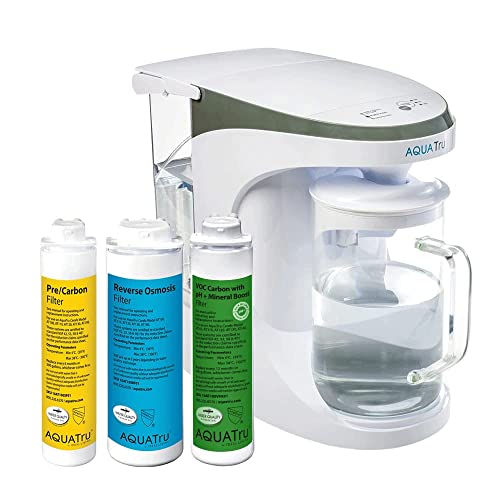
- Certified to Remove 84 Contaminants: Independently certified by IAMPO to NSF standards to remove 84 contaminants, includ…
- 4-Stage Ultra Reverse Osmosis Filtration: Multi-stage purification removes toxins, heavy metals, and dissolved solids fo…
- 64oz Glass Carafe — Compact Countertop Design: Stylish, space-saving purifier fits any kitchen and provides up to 64 oun…
Key Features:
- No installation required—plug and play design
- Certified to reduce 86 contaminants including microplastics
- Only filter tested that eliminated 100% of all contaminants in laboratory water quality testing
- 4:1 water efficiency ratio (better than most RO systems)
- Glass carafe eliminates plastic contact with filtered water
Lab Test Results: Achieved complete removal of fluoride, lead, uranium, barium, molybdenum, and microplastics. Received perfect 9.90 scores for both health-related and aesthetic contaminant removal.
Cost Analysis: At $449 upfront and about $100 annually in filters, it costs more than pitchers but less than under-sink installations. Pays for itself versus bottled water in under 12 months.
Best For: Renters, apartment dwellers, small families, or anyone wanting certified microplastic removal without permanent plumbing modifications.
3. British Berkefeld with Ultra Sterasyl Filter – Best Gravity System
This gravity filtration system offers certified microplastic removal without electricity, plumbing, or water waste—advantages over reverse osmosis.

- Advanced Filtration Technology: The British Berkefeld Doulton W9120133 8B76 7″ Ultra Fluoride Gravity Drinking Water Cer…
- Ultimate Water Purification: With its powerful ceramic filtration technology, this replacement candle element filter eli…
- Long-lasting Performance: Designed to provide long-lasting filtration, this pack of three replacement gravity-fed filter…
Key Features:
- Certified for microplastic and pathogen removal
- Gravity-powered (no electricity or plumbing required)
- Ceramic filter with sub-2.5 micron pore size
- No wastewater production
- Retains beneficial minerals
- Long filter life reduces replacement frequency
Lab Test Results: Independent testing confirms effective reduction of microplastics along with bacteria, cysts, sediment, and chlorine.
Best For: Off-grid living, emergency preparedness, or those seeking certified microplastic removal without RO’s water waste or multiple filter changes.
4. Epic Smart Shield Under-Sink Carbon Block – Best Non-RO Option
For those preferring carbon filtration without RO’s complexity, the Epic Smart Shield offers NSF/ANSI 401 certification for microplastic-sized particles with exceptional convenience.

- UNDER SINK WATER FILTER: The Smart Shield sets the standard for water filter under sink category on Amazon. It is the pe…
- TAP WATER FILTER: Solid carbon block water filter uses depth & adsorption filtration to achieve sub 1 micron contaminant…
- WATER FILTRATION SYSTEM UNDER SINK: The Smart Shield is the perfect under sink water filtration system. It is the ideal …
Key Features:
- Sub-micron carbon block filter (0.5-micron pore size)
- NSF/ANSI 401 certified for microplastic-sized particles
- Inline design maintains full water pressure
- 650-gallon capacity per filter
- Simple installation in 20 minutes
- No tank, drain, or water waste
Performance Notes: While not achieving RO’s 99.9% removal rate, this system provides verified protection against most microplastic-sized particles without RO’s drawbacks.
Best For: Renters, busy families, or anyone wanting effective microplastic reduction without tanks, drains, or reduced water pressure.
5. Brita Elite Pitcher – Best Budget-Friendly Option
The only water filter pitcher with official microplastics reduction certification, making it the best affordable entry point for microplastic protection.
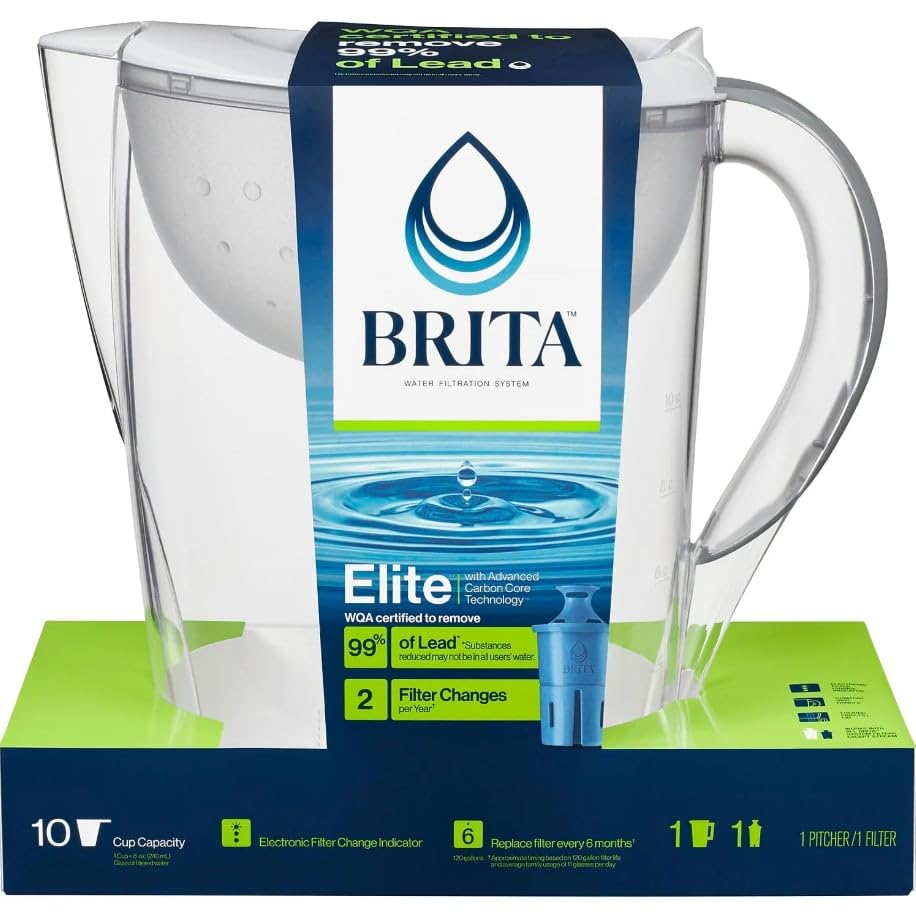
- Keep thirst-quenching water at the ready with the Brita Pacifica Large 10-Cup Water Filter Pitcher With 1 Longlast+ Filt…
- Made of BPA-free polystyrene for durability.
- Advanced filter technology helps remove chlorine taste and odor as well as copper, cadmium and mercury impurities.
Key Features:
- WQA certification to NSF/ANSI Standard 401 for microplastics
- Confirms ability to reduce at least 85% of microplastics
- Also certified for lead, chlorine, and other contaminants
- No installation required
- 10-cup capacity
- Filter replacement every 2 months
Lab Test Results: Testing confirms reduction of microplastics along with lead, mercury, chlorine, and aesthetic contaminants.
Limitations: Doesn’t match RO performance and requires frequent filter changes, but provides verified protection at accessible price point.
Best For: Budget-conscious households, renters with limited space, or those wanting basic certified microplastic reduction.
Understanding NSF/ANSI 401 Certification: Your Microplastics Guarantee
When shopping for microplastic water filters, one certification matters above all others: NSF/ANSI Standard 401.
What NSF 401 Certification Means
NSF/ANSI 401 is the standard for emerging compounds/incidental contaminants, including microplastics. Filters certified to this standard have undergone rigorous independent testing to verify they reduce microplastic-sized particles (specifically testing includes particles at 0.5 microns and larger).
Certification requires manufacturers to submit products to third-party testing, demonstrate consistent performance over the filter’s rated capacity, prove structural integrity and materials safety, and allow ongoing unannounced facility inspections.
Why Certification Matters
Many filters claim microplastic removal without any verification. Claims like “tested to NSF standards” without actual certification are meaningless—they might indicate partial testing or self-testing rather than independent verification.
Only trust filters with verified NSF 401 certification (or equivalent IAPMO or WQA certification) specifically listing microplastics or “particulates Class I” in their certification scope. This ensures you’re getting proven protection, not marketing hype.
How to Verify Certification
Visit the NSF website’s product database, IAPMO’s certification directory, or WQA’s gold seal database to verify any product’s certification status. Never rely solely on manufacturer claims—always independently verify.
Installation and Maintenance: Protecting Your Investment
Proper installation and maintenance ensure your microplastic filter continues delivering protection over time.
Installation Best Practices
Under-sink reverse osmosis systems require connection to cold water lines and drainage for wastewater. Most DIY-friendly models can be installed in 1-2 hours with moderate plumbing skills, but complex systems may benefit from professional installation.
Countertop RO systems need only a power outlet and counter space—no plumbing modifications required. Simply fill the reservoir with tap water and the system filters it into a clean water container.
Inline carbon block filters like the Epic Smart Shield install in 20 minutes with basic tools, connecting directly to your cold water line with compression fittings.
Critical Maintenance Requirements
Filter replacement schedules are non-negotiable. Sediment and carbon pre-filters typically need replacement every 6-12 months. RO membranes last 2-3 years depending on water quality. Post-filters and remineralization filters require annual replacement.
Skipping replacements creates multiple problems. Clogged pre-filters reduce water flow and force RO membranes to work harder, leading to premature failure. There is emerging research suggesting very old, degraded membranes could potentially shed tiny plastic particles themselves.
Set calendar reminders for replacement dates. Many modern systems include indicator lights or apps tracking filter life based on water volume filtered.
Annual System Sanitization
Once yearly, sanitize the entire system including storage tanks and lines to prevent bacterial growth. Follow manufacturer protocols using approved sanitizing solutions.
Beyond Filtration: Additional Ways to Reduce Microplastic Exposure
While filtration provides the most effective drinking water protection, other steps further minimize overall microplastic exposure.
Avoid Single-Use Plastics
Choose reusable stainless steel or glass water bottles instead of disposable plastic. Store food in glass or stainless steel containers rather than plastic. Avoid microwaving food in plastic containers, as heat accelerates microplastic leaching.
Choose Natural Fibers
Synthetic clothing (polyester, nylon, acrylic) sheds microplastic fibers with every wash. These fibers enter wastewater and eventually drinking water sources. Choose natural fabrics like cotton, wool, and linen when possible.
Install Washing Machine Filters
Special filters designed for washing machine discharge can capture synthetic fiber particles before they enter wastewater systems. Products like the Filtrol 160 or Cora Ball help reduce microplastic pollution at the source.
Support Systemic Solutions
Advocate for stronger regulations on plastic production and waste management. Support legislation requiring microplastic monitoring in drinking water. The EPA can and must address this emerging crisis, but public pressure drives regulatory action.
Frequently Asked Questions
Q: Can you taste or smell microplastics in water?
A: No. Microplastics are colorless, tasteless, and odorless. You cannot detect them with your senses. Only testing or proper filtration protects against them.
Q: Are microplastics regulated in drinking water?
A: Currently, there are no federal regulations requiring municipal treatment facilities to address microplastics in the United States or Canada. However, some states are beginning pilot monitoring programs. The EU has proposed 10 μg/L as a potential drinking water limit.
Q: Does boiling water remove microplastics?
A: No. Boiling does nothing to remove microplastics and may actually concentrate them by reducing water volume. Only physical filtration through sufficiently small pores removes these particles.
Q: Will my refrigerator filter remove microplastics?
A: Most refrigerator filters have 20-micron pore sizes—far too large to remove microplastics effectively. Some filters with 5-micron ratings might remove larger microplastics but not smaller particles. Don’t rely on refrigerator filters for microplastic protection.
Q: How do I know if my water has microplastics?
A: Assume it does. Research shows microplastics contaminate tap water worldwide, with detection in 83% of samples tested across multiple countries. Without specialized laboratory analysis, you cannot detect their presence.
Q: What’s the difference between microplastics and nanoplastics?
A: Microplastics are 1 to 5,000 micrometers in size. Nanoplastics are smaller than 1 micrometer (1,000 nanometers). Nanoplastics pose particular concern because they can cross cell membranes and potentially enter organs.
Q: Should I switch to bottled water to avoid microplastics?
A: Absolutely not. Bottled water contains significantly more microplastics than tap water—often hundreds of thousands of particles per liter. Filtering your tap water provides far better protection than bottled water.
Q: How much does effective microplastic filtration cost?
A: Entry-level certified pitcher filters like the Brita Elite cost around $35-45. Mid-range under-sink carbon blocks run $150-300. High-performance RO systems range from $300-600. Calculate cost per gallon for true comparison—RO systems often cost just 10-15 cents per gallon over their lifetime.
Take Action: Protect Your Family from Microplastic Exposure Today
Microplastics in drinking water represent an emerging public health concern that will only intensify as plastic production continues escalating. With scientists estimating we consume a credit card’s worth of plastic weekly, and drinking water serving as a major exposure pathway, taking action to protect your family is no longer optional—it’s essential.
The science is clear: not all water filters remove microplastics. Pitcher filters without NSF 401 certification, basic faucet filters, and granular activated carbon systems provide minimal protection. Only reverse osmosis, ultrafiltration, certified carbon block filters, and premium ceramic systems with verified testing deliver meaningful microplastic reduction.
Don’t wait for government regulations or municipal treatment upgrades. The EPA currently has no requirements for microplastic monitoring or removal, and municipal systems weren’t designed to address this contamination. Home filtration provides immediate, reliable protection starting with your very next glass of water.
Choose a filter with NSF/ANSI 401 certification or equivalent third-party verification specifically for microplastics. Install it properly following manufacturer instructions. Maintain it diligently with timely filter replacements. These simple steps dramatically reduce your family’s microplastic exposure while also removing heavy metals, PFAS, bacteria, and dozens of other contaminants.
The filters recommended in this guide offer proven, lab-tested microplastic removal backed by independent certification and real-world performance verification. Whether you choose the comprehensive protection of reverse osmosis, the convenience of a countertop system, or the budget-friendly option of a certified pitcher, you’re taking meaningful action to protect your health.
Your drinking water should nourish your body, not contaminate it with plastic particles linked to hormonal disruption, immune suppression, and potential organ accumulation. Make 2025 the year you take control of your water quality with certified microplastic filtration. Order your system today and give your family the clean water they deserve.
Disclaimer: This article contains affiliate links to Amazon products. We may earn a commission from qualifying purchases at no additional cost to you. Product availability and prices are subject to change. This information is for educational purposes and does not replace professional medical or environmental health advice. Always consult qualified professionals for specific health concerns.