Best Under-Sink Water Filters 2025: RO vs Carbon Filtration for Clean Drinking Water

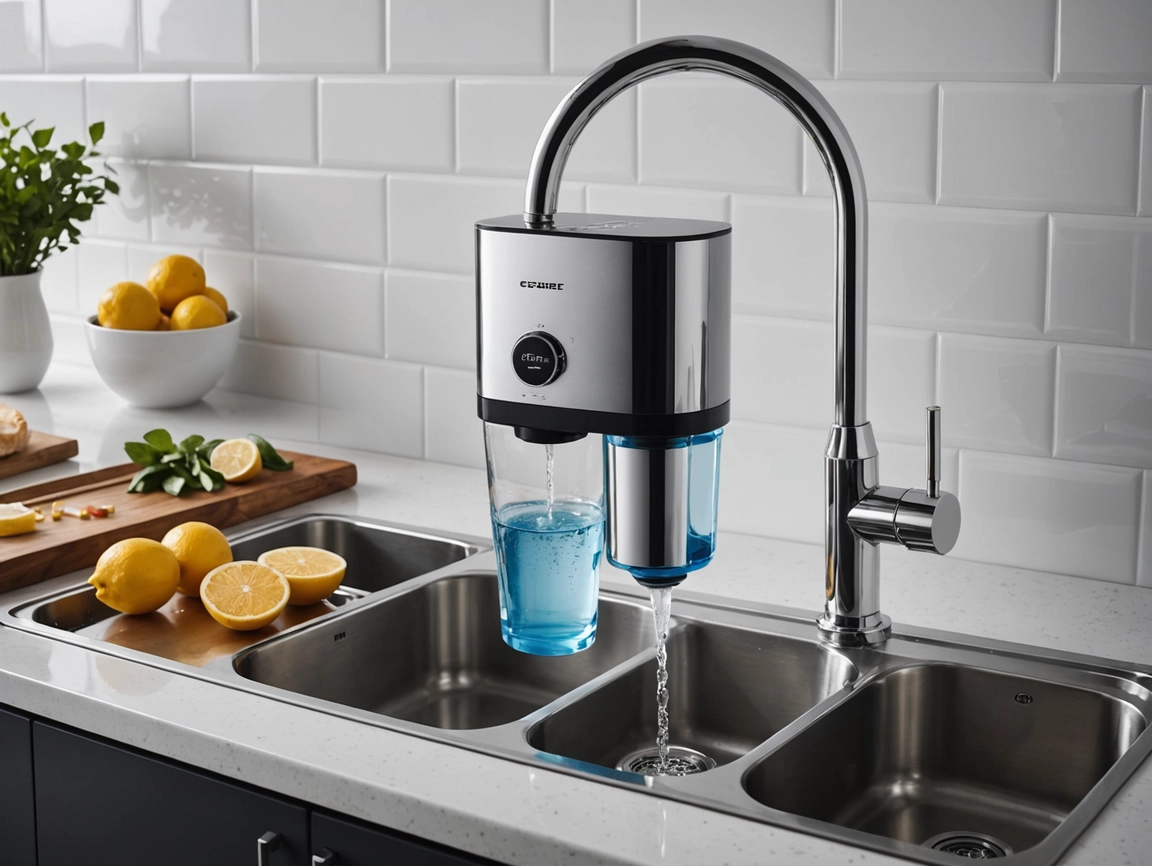
Transform Your Kitchen Tap Into a Clean Water Source
Every time you reach for a glass of water, make coffee, or cook a meal, you’re making a critical decision about your family’s health. The water flowing from your kitchen tap might look crystal clear, but it could contain lead, PFAS forever chemicals, microplastics, chlorine, and dozens of other contaminants that affect both taste and wellbeing.
Under-sink water filters represent the most convenient, cost-effective solution for transforming ordinary tap water into clean, safe drinking water. Unlike pitcher filters that require constant refilling or bottled water that costs thousands annually while generating plastic waste, under-sink systems deliver unlimited filtered water on demand—no waiting, no lifting heavy bottles, no cluttered countertops.
But here’s where it gets confusing: you’ll encounter two fundamentally different technologies—reverse osmosis and carbon filtration—each with passionate advocates claiming their approach is superior. Most under-sink filters in ratings remove PFAS, forever chemicals linked to cancer, thyroid disease, liver damage, and immune disorders, but performance varies dramatically between technologies and brands.
This comprehensive guide cuts through the marketing hype to explain exactly how RO and carbon systems work, which contaminants each removes most effectively, and most importantly, which specific under-sink filters deliver the best performance for your money in 2025. Whether you’re dealing with hard water, lead concerns, or just want better-tasting coffee, you’ll discover the perfect filtration solution for your specific needs.
Understanding Under-Sink Water Filters: The Basics
Before diving into specific technologies, understanding the fundamental concept helps you make informed decisions about your water quality.
What Is an Under-Sink Water Filter?
An under-sink water filter connects directly to your cold water line beneath the kitchen sink, treating water before it reaches your faucet. Most systems include either a dedicated filtered water faucet installed next to your main tap, or connect inline with your existing faucet using a diverter valve.
The filtration unit itself sits hidden in the cabinet below, out of sight and out of the way. This discreet installation delivers filtered water whenever you need it without occupying valuable counter space or requiring manual filling like pitcher filters.
Why Choose Under-Sink Over Other Options?
Under-sink filters offer compelling advantages over alternatives. Convenience leads the list—filtered water flows on demand at full pressure with no waiting. Under-sink water filters are inherently more convenient than pitchers, with higher filter capacity, eliminating constant refilling and storage hassles.
Cost efficiency represents another major benefit. While initial investment exceeds pitcher filters, the cost per gallon is dramatically lower over time—typically 10-20 cents per gallon compared to $1-3 for bottled water. For a family drinking 2 gallons daily, under-sink systems pay for themselves within 6-12 months.
Filter longevity provides additional value. Whereas pitcher filters last 40 gallons (about 2 months), under-sink cartridges filter 500-2,000 gallons before replacement. This translates to 6 months to 2+ years between changes depending on the system.
The Two Main Technologies
Under-sink systems divide into two distinct categories based on filtration technology: carbon filtration and reverse osmosis. Understanding the fundamental differences between these approaches is crucial for matching the right system to your water quality concerns.
Carbon filters use activated carbon media that attracts and traps contaminants through adsorption. Water flows through carbon blocks or granules, and impurities stick to the massive surface area of the carbon material. These systems excel at removing chlorine, volatile organic compounds, pesticides, and improving taste and odor.
Reverse osmosis systems use semi-permeable membranes with microscopic pores measuring just 0.0001 microns. Water is forced through under pressure while contaminants—including dissolved solids, heavy metals, and even viruses—are rejected and flushed away with a small amount of wastewater. Multi-stage RO systems remove 95-99% of contaminants such as lead, PFAS, fluoride, arsenic, and dissolved chemicals.
Reverse Osmosis Systems: Maximum Purification
When you want the most thorough water purification available for residential use, reverse osmosis delivers unmatched performance across the broadest range of contaminants.
How Reverse Osmosis Works
RO technology originated in military and industrial applications, including desalination of seawater. The process uses pressure to force water through an ultra-fine semi-permeable membrane. Pure water molecules pass through the membrane’s 0.0001-micron pores, while larger contaminant molecules rebound off the surface and are flushed away with wastewater.
Most under-sink RO systems include multiple filtration stages. A typical five-stage configuration includes sediment pre-filter to remove particles, carbon pre-filter to eliminate chlorine and organics, RO membrane for deep purification, carbon post-filter for final taste polishing, and optional remineralization filter to restore healthy minerals.
Layering protects downstream media and improves performance, lifespan, and taste. The sediment filter prevents larger particles from reaching and damaging the delicate RO membrane, while carbon removes chlorine that would degrade membrane materials.
What Reverse Osmosis Removes
RO systems achieve exceptional broad-spectrum contaminant removal. Laboratory testing consistently shows 95-99% reduction of heavy metals including lead, arsenic, chromium, mercury, and copper. PFAS forever chemicals, which resist most other treatment methods, are reduced by 90-95% or more through RO membranes.
Dissolved solids like fluoride, nitrates, sulfates, and sodium are virtually eliminated—RO typically reduces total dissolved solids by 85-95%. Microplastics and nanoplastics, too small for most other filters, are captured by RO’s ultrafine membrane. Even bacteria, viruses, and cysts are physically blocked by the membrane’s tiny pores.
Manufacturers claim roughly 98 to 99 percent removal of many dissolved solids, chemicals, and metals for quality RO systems, making them the most comprehensive residential water treatment available.
Advantages of RO Systems
Maximum contaminant removal stands as RO’s primary advantage. If your water contains multiple contaminants or you want comprehensive protection against known and unknown threats, RO provides the broadest safety margin.
Consistent performance regardless of input water quality makes RO reliable. Whether your municipal supply varies seasonally or you’re dealing with challenging well water, RO delivers predictably clean results.
Long membrane life—typically 2-3 years between replacements—reduces maintenance frequency compared to systems requiring quarterly filter changes.
Disadvantages of RO Systems
Water waste represents RO’s most significant drawback. RO systems create wastewater, often 2-4:1, meaning for every gallon of purified water, 2-4 gallons go down the drain. Modern tankless systems have improved this ratio to 2:1 or better, but some waste is inevitable.
RO removes healthy minerals including calcium, potassium, and magnesium along with contaminants. This creates very pure but mineral-free water with a “flat” taste some find unappealing. Remineralization filters address this by adding back beneficial minerals.
Higher cost—both initial and ongoing—exceeds carbon systems. Quality RO units cost $300-700 upfront, with annual filter replacement expenses of $100-200. Traditional tank-based systems also occupy significant cabinet space.
Slower flow rates compared to direct carbon filtration can be noticeable. Tank-based systems store filtered water for instant access, but once depleted, refill takes time. Tankless systems filter on-demand but may produce only 0.5-1.0 gallons per minute.
Carbon Block Filtration: Efficient and Economical
For many households, carbon block systems provide the optimal balance of performance, convenience, and cost without RO’s complications.
How Carbon Filtration Works
Carbon filters rely on adsorption, in which the filter acts like a magnet, allowing contaminants to collect on a large surface area. Activated carbon is produced by heating coconut shells, coal, or wood to extremely high temperatures, creating a porous material with enormous surface area—one pound of activated carbon contains a surface area equivalent to 100 acres.
Block carbon is formed into a block under high pressure, with high surface area able to remove many more contaminants than looser granulated carbon. The density and structure of carbon block filters determine their effectiveness. Water must flow slowly enough through the carbon for contaminants to be adsorbed rather than rushing past.
What Carbon Filters Remove
Carbon excels at removing chlorine and chloramine disinfectants—typically achieving 95-99% reduction and dramatically improving taste and odor. Volatile organic compounds like benzene, trihalomethanes, and pesticides are effectively captured through adsorption.
Some heavy metals including lead, mercury, and copper are reduced, though effectiveness varies by filter design. High-quality carbon blocks with NSF 53 certification can achieve 95%+ lead removal. Multi-filtration technology certified to capture 77 contaminants including heavy metals, pesticides, pharmaceuticals, and water treatment disinfectants shows what premium carbon systems achieve.
PFAS removal depends on carbon type and density. Catalytic carbon specifically designed for PFAS can achieve 80-95% reduction of these forever chemicals, though performance decreases as filters age.
Sediment, rust, and particles are physically trapped as water passes through the carbon block structure.
Advantages of Carbon Systems
No water waste represents carbon’s biggest advantage over RO. Every drop of water entering the filter emerges purified on the other side—crucial in drought-prone areas or for environmentally conscious households.
Carbon systems keep beneficial minerals in your water, preserving the natural taste many prefer while removing contaminants. Calcium and magnesium remain, providing taste and potential health benefits.
Faster flow rates maintain near-tap speeds. Systems filled one gallon in 38-42 seconds, approximately 1.4-1.65 gallons per minute, making them practical for high-volume uses like filling pots for cooking.
Lower cost—both initial and operational—makes carbon accessible. Quality systems cost $100-300 upfront with annual filter expenses of $60-120, roughly half of RO costs.
Simpler installation with fewer components means most homeowners can DIY in 30-60 minutes without professional help.
Disadvantages of Carbon Systems
Limited effectiveness against dissolved solids means carbon won’t reduce TDS, nitrates, fluoride, or sodium. If your water report shows high levels of these contaminants, carbon alone isn’t sufficient.
Variable PFAS performance requires careful product selection. Not all carbon filters reduce PFAS effectively—only those specifically certified to NSF 401 standard provide verified protection.
More frequent filter replacement—typically every 6-12 months versus 2-3 years for RO membranes—means more maintenance, though cartridge changes take just minutes.
RO vs Carbon: Which Technology Fits Your Needs?
Choosing between these technologies depends on your specific water quality, household requirements, and priorities. Here’s how to decide.
When to Choose Reverse Osmosis
Select RO if your water contains multiple contaminants including dissolved solids, nitrates above 5 ppm, fluoride you want removed, or if you have serious lead concerns beyond what carbon certified levels address. Well water with high TDS (above 500 ppm) or hardness (above 180 ppm as CaCO₃) benefits from RO’s comprehensive removal.
PFAS contamination confirmed through testing makes RO your best choice, as it provides the highest reduction rates (94-99%) across all PFAS compounds including newer types like GenX.
Immunocompromised household members may benefit from RO’s additional protection against bacteria, viruses, and cysts that carbon doesn’t address.
When Carbon Filtration Suffices
Choose carbon if your primary concerns are taste and odor from chlorine, you want to remove VOCs and pesticides without water waste, your water report shows acceptable levels of dissolved solids and heavy metals, or you prefer retaining natural minerals in your water.
Rental properties make carbon ideal—lower initial investment, simpler installation and removal, and no permanent plumbing modifications required.
Budget constraints favor carbon’s lower upfront and operating costs while still delivering meaningful contaminant reduction for typical municipal water.
The Hybrid Approach
Many people combine both technologies—water first goes through carbon to handle chlorine and organics, then through RO for deep purification. This explains why most under-sink RO systems already include carbon filters—they’re complementary, not competitors.
Some premium carbon systems incorporate multiple media types including KDF (copper-zinc alloy), ion exchange resins, and specialized PFAS-reduction carbon to expand their capabilities beyond standard activated carbon alone.
The 5 Best Under-Sink Water Filters for 2025
Based on independent laboratory testing, expert reviews, and real-world performance verification, these systems represent the top under-sink filters available on Amazon.
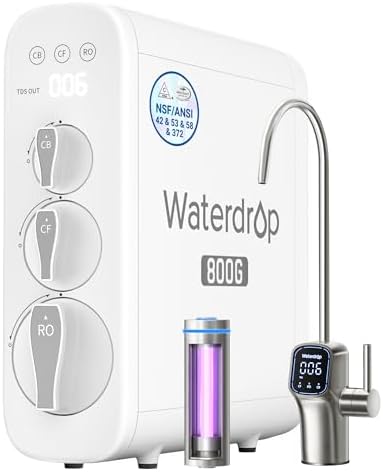
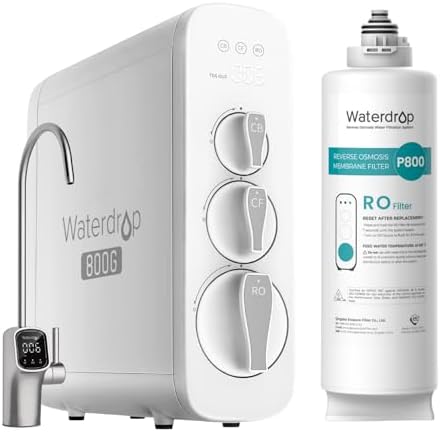
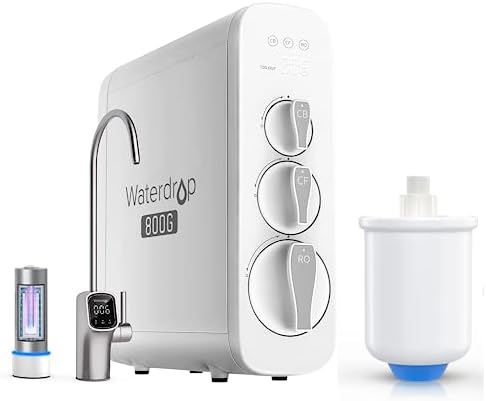
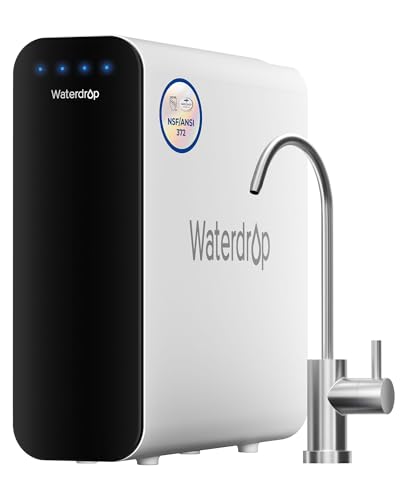
1. Waterdrop G3 P800 Tankless RO System – Best Overall
Waterdrop’s tankless design saves space compared with traditional RO systems and is more efficient, wasting far less water. The G3 P800 offered the best all-round performance with fast filtration rate, high-tech design, and simple maintenance.
Key Features:
- 800 gallons per day capacity delivers fast flow
- 3:1 pure to drain ratio (more efficient than typical RO)
- NSF/ANSI 42, 53, 58, and 372 certified
- Smart LED faucet displays TDS and filter life
- Built-in UV sterilization for 99.9% pathogen reduction
- Tankless design saves cabinet space
Lab Test Results: Independent testing showed reduction of TDS by 85-95%, elimination of lead, arsenic, fluoride, and PFAS to non-detectable levels, and maintained consistent performance over extended use.
Installation: DIY-friendly for those comfortable with basic plumbing. Requires electrical outlet under sink for pump and UV system.
Annual Cost: Approximately $170 in filter replacements (about 12 cents per gallon for average household).
Best For: Families needing high-volume, comprehensive filtration with premium features and proven performance.
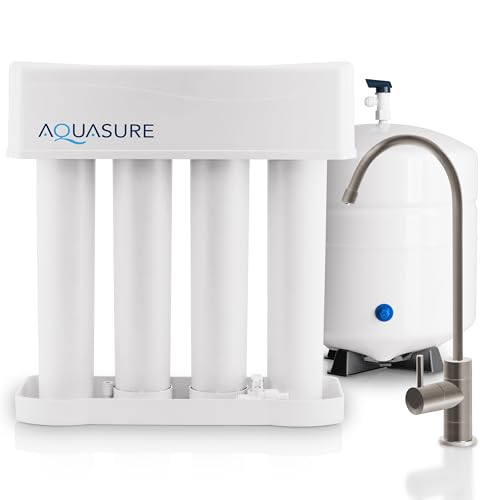
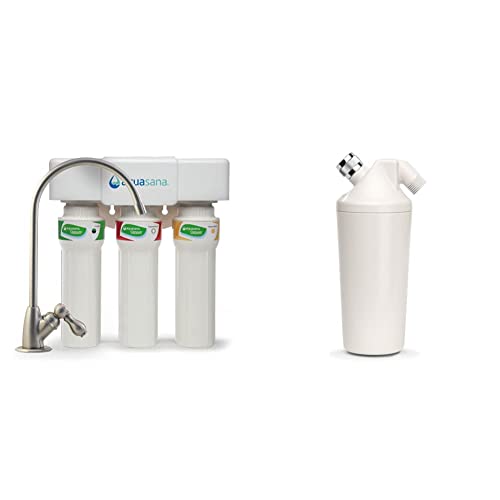
2. Aquasana Claryum 3-Stage Max Flow – Best Carbon System
The Aquasana Claryum 3-Stage Max Flow reduces up to 99.99% of 78 contaminants including lead, asbestos, VOCs, cysts, and microplastics, plus 97% of chlorine and 95% of mercury.

Key Features:
- WQA certified to NSF/ANSI 42, 53, and 401
- Three-stage filtration without water waste
- 800-gallon capacity (approximately 6 months)
- Retains healthy minerals
- Fast 0.72 GPM flow rate
- Brushed nickel dedicated faucet included
Performance: Addresses 15x more contaminants than leading pitcher filters while maintaining beneficial mineral content and natural taste.
Installation: Moderate DIY installation in 30-60 minutes. Twist-off filter design simplifies replacement.
Annual Cost: Approximately $120 in filter replacements (two 6-month cycles).
Best For: Households wanting maximum carbon filtration performance without RO complexity or water waste.
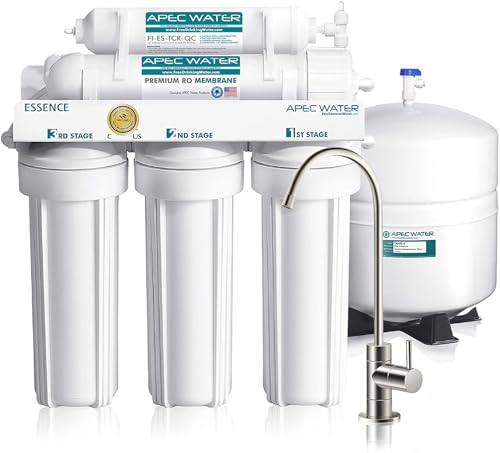
3. APEC ROES-50 Essence Series – Best Value RO System
The APEC ROES-50 brought every critical contaminant including lead, PFNA, arsenic, and uranium down to undetectable levels and posted nearly perfect scores for secondary contaminants.




Key Features:
- Five-stage reverse osmosis configuration
- NSF-certified components
- 50 gallons per day capacity
- 3.2-gallon storage tank
- Chrome faucet included
- WQA Gold Seal certification
Performance: Produces excellent-tasting water with 95-99% contaminant removal across broad spectrum. Long filter life reduces replacement frequency and cost.
Installation: Requires moderate DIY skills or professional installation. Tank-based design needs significant cabinet space.
Annual Cost: Approximately $80-100 in filter replacements, among the lowest for RO systems.
Best For: Budget-conscious households wanting proven RO performance without premium pricing.
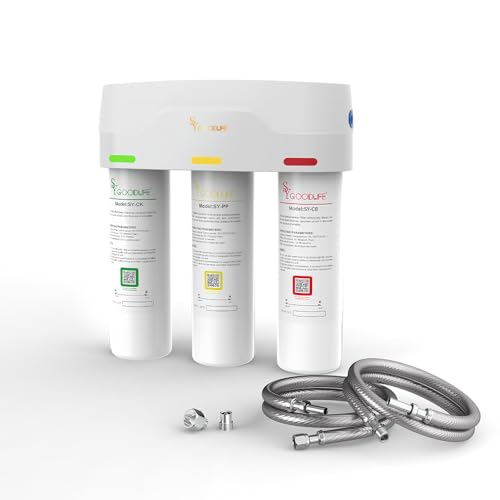
4. Clearly Filtered Under Sink 3-Stage – Best PFAS Carbon Filter
This system earned recognition for exceptional contaminant reduction including verified PFAS removal without reverse osmosis.

Key Features:
- WQA certified to reduce 100+ contaminants
- Specifically tested for PFAS, lead, chromium-6, fluoride
- 2,000-gallon capacity (longest-lasting carbon filters)
- Connects to existing faucet (no separate tap needed)
- Zero water waste
- 1.01 GPM flow rate
Performance: Cleared 1 gallon in 7.47 seconds maintaining near-tap flow while improving taste by removing chlorine and leaving minerals intact.
Installation: Inline design installs in 20-30 minutes without drilling or separate faucet.
Annual Cost: Approximately $85 based on 12-18 month filter life.
Best For: Renters, those wanting PFAS protection without RO, or anyone preferring to use existing faucet rather than adding a dedicated tap.
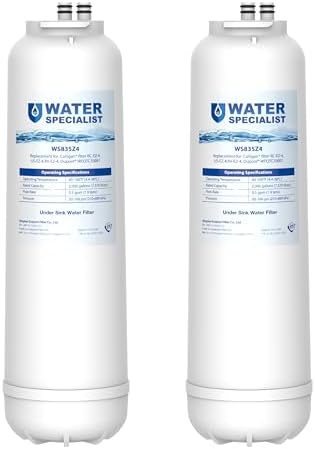
5. Culligan EZ-Change US-EZ-4 – Best Budget Option
Culligan is a trusted name with low initial cost and relatively affordable replacement filters at around $80 per year.


Key Features:
- NSF/ANSI 42, 53, and 401 certified
- LED filter replacement indicator
- 500-gallon capacity
- 0.5 GPM flow rate
- Dedicated faucet included
- Tool-free filter replacement
Performance: Certified to reduce lead, PFAS, chlorine, and aesthetic contaminants. Provides great-tasting water comparable to bottled.
Installation: DIY-friendly though some users report fittings can be finicky. Clear instructions included.
Annual Cost: $60-80 for two filter replacements annually.
Best For: Small households (1-3 people) wanting certified filtration at entry-level pricing.
Installation Guide: What to Expect
Understanding the installation process helps you decide whether to DIY or hire a professional.
Pre-Installation Checklist
Measure cabinet space beneath your sink—typical under-sink systems need 15-18 inches height, 12-15 inches width. Tankless RO systems are less space-occupying compared to traditional tank systems, ideal for crowded cabinets.
Check water pressure—RO systems require minimum 40-60 psi. Low pressure may necessitate a booster pump.
Confirm you have access to cold water line, drainage for RO systems, and electrical outlet if required for pumps or UV systems.
Basic Installation Steps
Typical under-sink installation follows this process:
- Shut off water supply at the valve beneath sink
- Install T-adapter or saddle valve on cold water line
- Connect tubing from water line to filter inlet
- Mount filter bracket or system to cabinet wall
- Drill hole for dedicated faucet if included (typically 1-1.5 inch diameter)
- Install faucet and connect tubing from filter outlet
- For RO: Connect drain saddle to sink drain pipe and wastewater line
- Turn water back on and check for leaks
- Flush system according to manufacturer instructions
DIY install for carbon systems takes 10-30 minutes, while RO may take longer because of drain setup and tank.
When to Hire a Professional
Consider professional installation if you’re uncomfortable with plumbing work, your sink lacks pre-drilled holes for additional faucets, you’re installing a complex multi-stage RO system, or your home has PEX or unusual plumbing requiring specialized tools.
Professional installation typically costs $100-200 but ensures proper setup and may be required to maintain warranty coverage on some systems.
Maintenance: Keeping Your System Performing
Proper maintenance ensures your filter continues removing contaminants effectively over its rated lifespan.
Filter Replacement Schedules
The sediment filter typically lasts 6 months, carbon filters 9-12 months, and semi-permeable membranes about 2 years for RO systems. Carbon-only systems generally require replacement every 6-18 months depending on capacity and usage.
Set calendar reminders for replacement dates. Many modern systems include LED indicators or smart features tracking filter life based on water volume filtered.
Why Timely Replacement Matters
If you don’t change filters when saturated, contaminant levels in filtered water can exceed levels coming from the tap. Overloaded carbon releases previously captured contaminants back into water—a phenomenon called breakthrough that defeats the filter’s purpose.
Clogged pre-filters reduce flow and force RO membranes to work harder, leading to premature failure. Neglected maintenance ultimately costs more through emergency replacements and potential health exposure.
Annual System Sanitization
Once yearly, sanitize the entire system including storage tanks and tubing. Most manufacturers provide sanitizing solutions and detailed protocols. This prevents bacterial growth that could compromise water quality even if contaminant removal remains effective.
Cost Analysis: What You’ll Really Spend
Understanding total cost of ownership beyond initial purchase helps you make informed financial decisions.
Upfront Investment
Carbon block systems: $100-300 Basic RO systems: $200-400 Premium RO systems: $400-700 Professional installation (if needed): $100-200
Annual Operating Costs
Carbon filter replacements: $60-120 annually RO filter set replacements: $100-200 annually Wastewater cost (RO only): $20-60 annually depending on local water rates
Cost Per Gallon
Carbon systems: 8-15 cents per gallon RO systems: 12-20 cents per gallon Bottled water: $1-3 per gallon Pitcher filters: 25-40 cents per gallon
For a family consuming 2 gallons of drinking water daily (730 gallons annually), an under-sink system costs $60-150 per year versus $730-2,190 for bottled water—a savings of $580-2,040 annually.
Understanding Certifications: Why They Matter
Third-party certifications provide crucial verification that filters perform as claimed.
Key NSF/ANSI Standards
NSF 42: Aesthetic effects including chlorine, taste, and odor. Every quality filter should have this baseline certification.
NSF 53: Health effects including lead, mercury, VOCs, and cysts. Essential for any filter claiming health-related contaminant removal.
NSF 58: Specific to reverse osmosis systems. Verifies TDS reduction and contaminant removal performance.
NSF 401: Emerging contaminants including PFAS, pharmaceuticals, and BPA. Critical certification if these contaminants concern you.
NSF 372: Lead-free materials in filter construction. Ensures the filter itself doesn’t introduce lead.
How to Verify Certifications
Visit NSF.org, WQA.org, or IAPMO.org and search their product databases. Enter the specific model number and verify which contaminants are certified for reduction. Don’t rely solely on marketing claims—independent verification protects your investment.
Frequently Asked Questions
Q: Do I need to test my water before buying a filter?
A: Testing helps match the filter to your specific contaminants. Request your municipal water quality report (free from your utility) or use a home test kit. However, even without testing, quality under-sink filters address the most common concerns in typical water supplies.
Q: Will an under-sink filter remove bacteria and viruses?
A: RO systems with intact membranes can reduce bacteria and viruses, though they’re not specifically certified for microbiological reduction. For confirmed biological contamination, add a UV purification stage or choose a system specifically certified for pathogen removal.
Q: Can I install an under-sink filter if I rent?
A: Yes. Choose systems that connect to existing faucets rather than requiring dedicated taps. Carbon systems without tanks are most renter-friendly. Save all original parts for reinstallation when moving.
Q: How do I know when to replace filters?
A: Follow manufacturer time recommendations (typically 6-12 months for carbon, 2-3 years for RO membranes). Some systems include indicator lights or smart features tracking actual usage. Don’t wait for taste changes—contaminant removal degrades before taste changes occur.
Q: Will an under-sink filter reduce my water pressure?
A: Carbon systems cause minimal pressure drop. Systems maintained near-tap flow rates of 1.4-1.65 GPM. RO systems produce 0.5-1.0 GPM, slower than direct tap but sufficient for drinking and cooking. Tankless RO provides on-demand flow without storage limitations.
Q: Can I use filtered water for my refrigerator ice maker?
A: Yes. Some under-sink systems include a splitter to feed both your faucet and refrigerator water line, providing filtered water for ice and dispensers.
Q: Which removes more contaminants—RO or carbon?
A: RO removes a broader range of contaminants including dissolved solids, but quality carbon systems effectively address the most common concerns in municipal water. Match the technology to your specific water quality needs rather than choosing based solely on maximum removal.
Q: Do under-sink filters remove the “good” minerals?
A: RO removes all dissolved minerals including beneficial calcium and magnesium. Many RO systems include remineralization filters to restore these. Carbon systems retain minerals naturally. The health impact of demineralized water remains debated—consult with healthcare providers if concerned.
Take Action: Choose Your Filter Today
Clean drinking water shouldn’t be a luxury—it’s a necessity for protecting your family’s health and wellbeing. Under-sink water filters provide the most practical, cost-effective solution for transforming questionable tap water into clean, safe, great-tasting water on demand.
The decision between reverse osmosis and carbon filtration ultimately depends on your specific water quality and priorities. RO systems are best at removing impurities and provide maximum protection against the broadest range of contaminants. Carbon systems offer effective filtration without water waste while retaining beneficial minerals at lower cost.
Don’t wait for a water crisis, health concern, or confirmed contamination to act. The filters recommended in this guide deliver proven performance backed by independent certification and real-world testing. Whether you choose the comprehensive protection of the Waterdrop G3 P800, the exceptional carbon filtration of the Aquasana Claryum, or the budget-friendly value of the Culligan EZ-Change, you’re investing in something far more valuable than a water filter—you’re investing in your family’s long-term health.
Order your under-sink water filter today and join millions of households who’ve taken control of their water quality. Your family deserves clean water with every glass, every meal, and every day.
Disclaimer: This article contains affiliate links to Amazon products. We may earn a commission from qualifying purchases at no additional cost to you. Product availability and prices are subject to change. This information is for educational purposes and does not replace professional medical or water quality testing advice. Always test your water to understand specific contamination concerns.