Water Contamination From Old Pipes: How to Identify and Fix Heavy Metal Exposure at Home

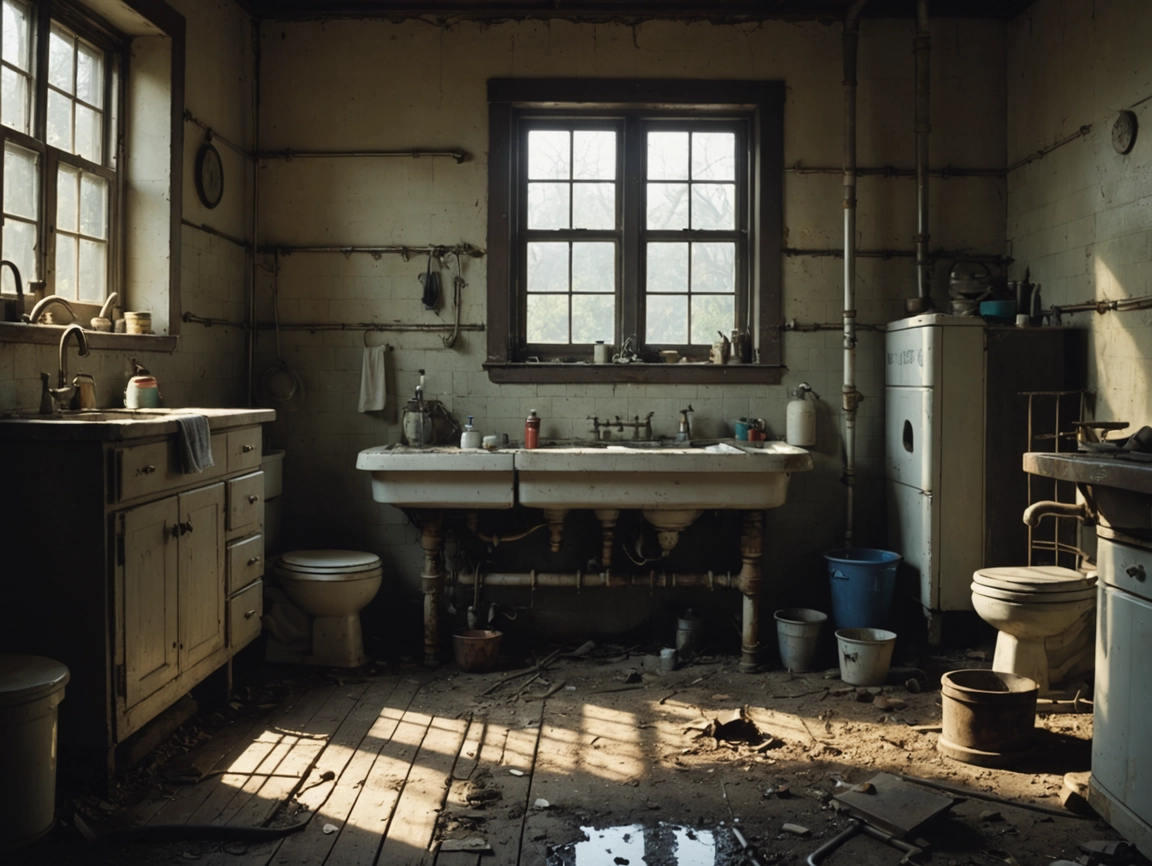
The Hidden Threat in Your Home’s Plumbing
Your home’s plumbing system might be silently poisoning your family. Right now, as you read this, millions of American homes have aging pipes leaching dangerous heavy metals into drinking water—and most homeowners have no idea.
The statistics are alarming. Between 6 and 10 million lead service lines remain in operation across the United States, connecting homes to municipal water mains. But that’s just the beginning. Inside your home, old pipes, corroded fittings, and outdated solder continue contaminating water long after it leaves the treatment plant.
Here’s what makes this crisis particularly insidious: lead can enter drinking water when a chemical reaction occurs in plumbing materials that contain lead, a process known as corrosion—dissolving or wearing away of metal from pipes and fixtures. The water your municipality delivers might be perfectly safe, but by the time it flows from your tap, it could contain lead, copper, iron, and other heavy metals at dangerous levels.
If your home was built before 1986, you’re at significant risk. Even newer homes aren’t immune—regulations allowed lead in brass fixtures until 2014, and materials labeled “lead-free” can still contain up to 0.25% lead today.
This comprehensive guide will teach you how to identify dangerous pipes in your home, understand the health risks of heavy metal exposure, test your water accurately, and most importantly, implement effective solutions to protect your family from contamination starting today.
Understanding How Old Pipes Contaminate Your Water
Before you can fix the problem, understanding how contamination occurs helps you identify risk factors in your specific situation.
The Corrosion Process
Corrosion is a dissolving or wearing away of metal caused by a chemical reaction between water and your plumbing. Multiple factors determine the extent to which heavy metals enter your water, including water chemistry such as acidity and alkalinity, the types and amounts of minerals in the water, water temperature, the length of time water stands in pipes, and the condition and age of the plumbing materials.
Water with high acidity or low mineral content proves more corrosive, aggressively attacking pipes and fixtures. This reaction accelerates when water sits stagnant in pipes for hours—which is why first-draw morning water typically contains the highest contamination levels.
The Age Factor
Plumbing installed before the 1980s may already be unsafe, with galvanized steel pipes corroding after 40-50 years, lead pipes dangerous at any age, and copper lasting longer but still failing after decades. Your home’s age provides crucial clues about contamination risk.
Homes Built Before 1930: Almost certainly contain lead pipes or lead service lines. Lead was the premium plumbing material of this era.
Homes Built 1930-1986: May have copper pipes with lead-based solder connecting joints. Congress amended the Safe Drinking Water Act to mandate “lead-free” solder for plumbing after 1986, but homes built before this time may still contain lead solder.
Homes Built 1986-2014: Likely have copper pipes with lead-free solder, but regulations allowed manufacturers to use significant amounts of lead in the construction of faucets, valves, and other plumbing fixtures until 2014.
Homes Built After 2014: Should have minimal lead in fixtures and fittings, though brass components can still contain up to 0.25% lead and be labeled “lead-free.”
The Service Line Connection
Your home’s interior plumbing represents only part of the equation. The service line connecting your home to the municipal water main may traverse 30-100 feet underground, and this line often contains lead even when interior pipes don’t.
Lead service lines—the pipes that carry water from the water main under the street to residences—have long been recognized as the primary contributor of lead in drinking water. Many cities installed these lines decades ago and have inadequate records of their locations.
Partial replacements create particular danger. When cities replace their portion of the service line with copper while leaving the homeowner’s lead section in place, galvanic corrosion at the connection point can actually increase lead leaching.
Types of Pipes and Their Contamination Risks
Different pipe materials pose distinct health risks. Identifying what’s in your home determines which contaminants concern you most.
Lead Pipes: The Most Dangerous
Lead pipes appear dull gray when not painted or wrapped. If you gently scratch the surface with a coin and the pipe is soft and easily scraped, silver in color, and if a magnet doesn’t stick, it is lead. There may also be a bulb-like swelling near connections that looks like a snake that swallowed an egg—a characteristic “wipe joint” confirming lead pipe presence.
Health Risks: EPA has set the maximum contaminant level goal for lead in drinking water at zero because lead is a toxic metal that can be harmful to human health even at low exposure levels. In children, lead can severely harm mental and physical development, slow down learning, and irreversibly damage the brain. In adults, lead causes increased blood pressure, heart disease, decreased kidney function, and cancer.
Galvanized Steel Pipes: Hidden Lead Reservoirs
Galvanized pipes appear silver or gray and make a metallic sound when tapped. If a magnet sticks, this portion of the service line is galvanized steel. While galvanized pipes themselves don’t contain lead, they create serious problems in two ways.
First, galvanized steel pipes corrode after 40-50 years, and these corroded areas can be places where lead leaching from a lead service line can gather. Second, the corroded interior surfaces shed iron particles that discolor water and damage appliances.
Health Risks: The zinc coating erodes over time, resulting in corrosion. Lead from upstream sources accumulates on the corroded interior walls. Lead release from galvanized pipes can vary from home to home and continue even after a lead service line is replaced.
Copper Pipes with Lead Solder
Copper pipes are copper-colored (like a penny) when new, gradually transitioning to dark brown with age. If it is copper-colored and a magnet doesn’t stick, this portion of the service line is copper. While copper itself poses minimal risk, the solder connecting pipe sections may contain substantial lead.
In 1986, the U.S. mandated lead-free solder for plumbing, so the age of your house and knowledge of when plumbing was installed can help you. Pre-1986 solder often contained 50% lead by weight—called “50/50 solder” with 50% lead and 50% tin.
Health Risks: Copper exposure can cause gastrointestinal distress, and excessive copper damages the liver and kidneys. Blue-green staining on sinks indicates elevated copper levels. Lead from solder joints leaches into water, especially during the first minutes of flow after pipes have been sitting unused.
Brass Fixtures and Fittings
Almost all faucets, valves, and fittings have brass components which may contain lead. Brass is an alloy typically composed of copper and zinc, often containing lead to improve machinability.
Until 2014, brass faucets and fittings sold in the United States and labeled “lead-free” could contain up to eight percent lead. Even after the 2014 Reduction of Lead in Drinking Water Act, fixtures can contain up to 0.25% lead and still be considered “lead-free.”
Plastic Pipes: The Safe Alternative
Modern plastic pipes including PVC (white or gray) and PEX (red, blue, white, or black) do not contain or leach heavy metals. If your pipes are joined with clamps, screws, or glue rather than solder, you likely have plastic piping that poses no heavy metal risk.
How to Identify Your Home’s Pipe Materials
You can determine your pipe materials through simple DIY inspection requiring only basic tools.
The Scratch and Magnet Test
This simple test identifies pipe materials with reasonable accuracy:
What You’ll Need:
- Strong refrigerator magnet
- Coin, key, or flathead screwdriver
- Flashlight
- Camera or phone to document findings
Where to Look: Find where your water service line enters your home, typically in the basement, crawlspace, or utility room near the water meter. Locate the shutoff valve—the pipe connected to it is your service line.
Step-by-Step Process:
- Visual Inspection: Note the pipe color and appearance before touching it
- Magnet Test: Place a strong magnet against the pipe
- If magnet sticks: Galvanized steel
- If magnet doesn’t stick: Lead, copper, or plastic
- Scratch Test: If paint or corrosion covers the pipe, gently scratch a small area with your coin or key
- Shiny silver scratch + no magnet = Lead pipe
- Copper/penny color scratch + no magnet = Copper pipe
- Dull gray scratch + magnet sticks = Galvanized steel
- Look for Telltale Signs:
- Bulb-like swelling near connections = Lead “wipe joint”
- White or gray with clamps/glue = Plastic (safe)
- Threads at pipe ends = Steel or galvanized
Checking Service Lines Outside
Your interior plumbing might be safe while your underground service line contains lead. Contact your water utility to request service line material information. Many cities now maintain online databases showing service line materials by address.
If your utility lacks records, they may inspect the curb stop (valve near your property line) for you. Some utilities offer free inspections, while others provide DIY instructions for homeowners to check and report findings.
Testing Solder and Fixtures
Even with copper pipes, lead solder remains a concern. Test the solder (binding between pipes) using the same scratch method—if the scraped area is shiny, the solder likely contains lead.
For brass fixtures, visual inspection provides limited information. Most fixtures contain some brass components, and determining lead content requires laboratory testing of the water itself rather than the fixture.
When Visual Inspection Isn’t Possible
Sometimes pipes are painted, wrapped, buried, or located behind walls where direct inspection proves impossible. In these cases, professional inspection or water testing becomes necessary to determine contamination risk.
Testing Your Water for Heavy Metals
Pipe identification tells you about potential risk, but water testing reveals actual contamination levels.
When to Test Your Water
Test immediately if your home was built before 1986, if you’ve identified lead or galvanized pipes, after any plumbing work or water main repairs, if you notice water discoloration or metallic taste, before preparing formula for infants, or when pregnant women or young children live in the home.
DIY Test Kits vs Laboratory Testing
DIY Home Test Kits ($15-40): Provide quick results for lead, copper, iron, and other metals. The most sensitive kits detect lead at 4 parts per billion. These work well for screening but should be confirmed with laboratory testing if results show contamination.
Laboratory Testing ($50-150): Provides precise quantification of metal concentrations. EPA-certified laboratories use approved methods achieving accuracy within 2-5%. This is essential for confirming DIY positive results, real estate transactions, or when precise measurements matter.
Proper Sample Collection
Collect first-draw samples after at least 6 hours without water use (overnight is ideal). This reveals maximum potential contamination from stagnant water sitting in pipes. Use only sterile containers provided with test kits—never reuse bottles. Follow kit instructions precisely regarding sample volume, storage, and shipping.
Test multiple locations if possible. Lead levels can vary dramatically between faucets depending on the specific pipes and fixtures serving each tap.
The Health Consequences of Heavy Metal Exposure
Understanding health risks motivates action and helps you recognize symptoms of ongoing exposure.
Lead: No Safe Level
No safe blood lead level has been identified for young children, and all sources of lead exposure for children should be controlled. Even small amounts cause permanent neurological damage in developing brains.
In Children:
- Lowered IQ and academic achievement
- Attention deficit hyperactivity disorder
- Learning disabilities
- Behavioral problems
- Slowed growth and development
- Hearing and speech problems
- Anemia
In Adults:
- Cardiovascular effects and hypertension
- Decreased kidney function
- Reproductive problems
- Nerve disorders causing pain, numbness, or weakness
- Memory and concentration problems
- Joint and muscle pain
Copper: Gastrointestinal and Liver Damage
While copper is an essential nutrient in small amounts, elevated levels cause acute gastrointestinal distress including nausea, vomiting, and diarrhea. Chronic exposure can damage the liver and kidneys, particularly in individuals with Wilson’s disease.
EPA’s action level for copper is 1.3 mg/L, though taste issues typically occur at lower concentrations around 1.0 mg/L.
Iron: Aesthetic Problems
Iron doesn’t pose direct health risks at levels typically found in drinking water, but it creates significant practical problems including rust staining on fixtures and laundry, metallic taste making water unpalatable, bacterial growth in pipes (iron bacteria), and damage to water-using appliances.
Immediate Actions to Reduce Exposure
While you plan permanent solutions, these steps immediately reduce heavy metal intake.
Flush Your Pipes
If lead or copper levels are high, let the water run for a few minutes before using it for drinking or cooking, especially after periods of inactivity. This flushes out contaminated water that’s been sitting in pipes.
Run cold water for 30 seconds to 3 minutes before use. The longer water has been stagnant, the longer you should flush. After overnight periods or vacations, flush for a full 3 minutes.
Use Only Cold Water for Consumption
Hot water can leach more lead and copper from plumbing than cold water, so always use cold water for cooking and drinking, and heat it up if necessary. Never cook with or drink hot tap water. If you need hot water, draw cold and heat it in a kettle or pot.
Install Point-of-Use Filters
While filters don’t fix the underlying problem, they provide immediate protection. Choose filters certified to NSF/ANSI Standard 53 specifically for lead reduction. Not all filters remove lead—verify certification for your specific contaminants of concern.
Permanent Solutions: Fixing Contamination at the Source
Temporary measures protect you short-term, but permanent remediation eliminates ongoing risk.
Option 1: Service Line Replacement
If testing confirms lead service lines, replacement is the only permanent solution. The Lead and Copper Rule Improvements require drinking water systems across the country to identify and replace lead pipes within 10 years.
Cost: Full service line replacement typically costs $3,000-10,000 depending on length and accessibility. Many municipalities now offer assistance programs, subsidies, or free replacement. The Bipartisan Infrastructure Law provides billions in funding for lead service line replacement.
Important: Even after your lead service line is replaced, your water should be filtered for at least six months, since lead particles can adhere to your indoor plumbing for several months and can be released into your tap water.
Option 2: Interior Plumbing Replacement
If lead or galvanized pipes exist inside your home, replacement eliminates the contamination source. If you have indoor lead pipes, lead solder, or faucets that contain lead, consider replacing them but not with plastic; use copper pipes.
Cost: Whole-house replumbing costs $2,000-15,000 depending on home size and complexity. Partial replacement of only the most problematic sections costs less but provides incomplete protection.
Materials: All new plumbing materials should be confirmed to be certified to NSF/ANSI standard 61, which limits the amount of contaminants in plumbing materials. Modern copper pipes with lead-free solder, PEX, or CPVC all provide safe alternatives.
Option 3: Whole-House Water Filtration
For comprehensive protection without pipe replacement, whole-house water treatment systems filter water at the point of entry.
Reverse Osmosis Systems: Remove 95-99% of lead, copper, arsenic, and other dissolved metals. These systems require professional installation and ongoing maintenance but provide the highest level of protection.
Carbon Block Filters with KDF Media: Combine activated carbon with copper-zinc alloy media specifically designed for heavy metal reduction. These remove 90-95% of lead and copper while also eliminating chlorine and organics.
Cost: Whole-house systems range from $1,000-3,000 installed, with annual filter replacement costs of $200-400. Point-of-use under-sink systems cost $200-600 and protect drinking and cooking water.
The 5 Best Heavy Metal Water Filters for 2025
If pipe replacement isn’t immediately feasible, these certified filters provide reliable heavy metal protection.
1. Waterdrop G3 P800 Under-Sink RO System – Best Overall
This tankless reverse osmosis system achieves 99%+ removal of lead, arsenic, chromium, copper, and other heavy metals with NSF/ANSI 53 certification.

- 𝐓𝐫𝐮𝐬𝐭𝐞𝐝 𝐜𝐞𝐫𝐭𝐢𝐟𝐢𝐜𝐚𝐭𝐢𝐨𝐧𝐬: Waterdrop G3 reverse osmosis system is certified against NSF/ANSI 58 for TDS reduction and NSF/A…
- 𝟖-𝐬𝐭𝐚𝐠𝐞 𝐟𝐢𝐥𝐭𝐫𝐚𝐭𝐢𝐨𝐧: Tested by official third-party laboratory (SGS), the reverse osmosis system can effectively reduce T…
- 𝐒𝐦𝐚𝐫𝐭 𝐝𝐢𝐬𝐩𝐥𝐚𝐲 𝐟𝐚𝐮𝐜𝐞𝐭: The tankless reverse osmosis system is built with a smart display faucet. For instance, the TDS mo…
Key Features:
- 800 GPD capacity with fast flow rate
- TDS reduction by 95%+
- Smart LED faucet displays water quality
- Tankless design saves cabinet space
- Removes heavy metals, PFAS, fluoride, and 90+ contaminants
Best For: Comprehensive heavy metal protection with professional-grade performance.
2. APEC ROES-50 Essence Series – Best Value RO System
Five-stage reverse osmosis with verified lead removal down to undetectable levels at an affordable price point.
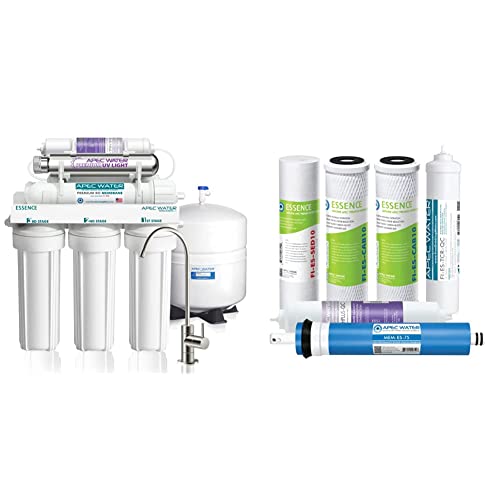
- Supreme quality system designed, engineered and assembled in USA to remove up to 99% of over 1000 contaminants including…
- Includes premium long-lasting filters to treat tap & well water, providing unlimited clean, refreshing crisp tasting wat…
- Continuous UV sterilization destroys up to 99.99% of bacteria, viruses & cysts, and kills parasites in un-chlorinated wa…
Key Features:
- WQA Gold Seal certification
- NSF-certified components
- 50 gallons per day capacity
- Removes 95-99% of heavy metals
- Excellent-tasting water
Best For: Budget-conscious households needing reliable lead and heavy metal removal.
3. Aquasana Claryum 3-Stage Max Flow – Best Carbon System
This carbon block system achieves 99.99% lead removal without reverse osmosis complexity or water waste.
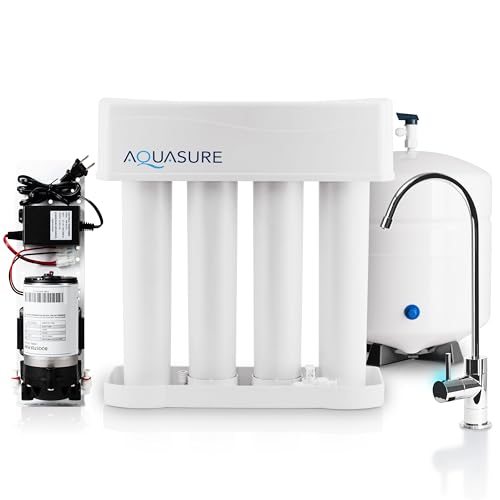
- 【 ADVANCED MULTI STAGE FILTRATION 】Experience the purity of water with Aquasure’s reverse osmosis system. Our 4-stage fi…
- 【 EXCEPTIONAL PERFORMANCE 】Our under-sink RO system uses a membrane with the highest purification precision at 0.0001 mi…
- 【 PERFECT FOR LOW WATER PRESSURE】If you’re facing low water pressure issues, this RO system is the solution for you. It …
Key Features:
- NSF/ANSI 53 certified for lead reduction
- Also certified to NSF 42 and 401
- 800-gallon capacity
- Fast 0.72 GPM flow
- No wastewater production
- Retains healthy minerals
Best For: Households wanting certified lead removal without RO’s water waste.
4. SpringWell Whole-House Lead and Iron Filter – Best for Well Water
Specialized system combining KDF media, activated carbon, and sediment filtration for comprehensive heavy metal removal throughout the home.

- THE ULTIMATE COMBO FILTRATION & SOFTENER SYSTEM: Activated Carbon Removes/Reduces Chlorine, Chloramine, Haloacetic Acids…
- WHAT’S INCLUDED: Water Filter Housing, Sediement FIlter + Scale Reducer, Carbon Block + CTO, .5 Micron filter, Mounting …
- EASY MAINTENANCE & WARRANTY: No draining or back flushing needed – Easily replace filters every 12 months for the best f…
Key Features:
- Four-stage filtration process
- Removes lead, iron, manganese, mercury, copper
- One million gallon capacity
- Treats all water in home
- Lifetime warranty on tanks
Best For: Well water owners dealing with multiple heavy metal contaminants.
5. Clearly Filtered Under-Sink 3-Stage – Best PFAS and Lead Combo
WQA certified to remove 100+ contaminants including lead and emerging contaminants without RO.

- WHAT’S INSIDE: Clearly Filtered Water Pitcher with Filter + 3 pk Replacement Filters
- NEW DESIGN: August 2024 Clearly Filtered Water Pitcher – The redesigned Clearly Filtered Water Pitcher has the most ergo…
- ADVANCED AFFINITY FILTRATION TECHNOLOGY: Our proprietary filtration system targets and removes up to 99.9% of 365+ conta…
Key Features:
- 2,000-gallon capacity (longest-lasting filters)
- Verified lead, chromium-6, fluoride removal
- Fast 1.01 GPM flow
- No water waste
- Connects to existing faucet
Best For: Those wanting certified lead removal plus PFAS protection without installing a separate tap.
Taking Action: Your Step-by-Step Plan
Don’t let this information overwhelm you. Follow this systematic approach to protect your family.
Week 1: Assessment
- Identify your home’s construction date
- Perform visual pipe inspection and scratch test
- Contact water utility about service line material
- Order water test kit
Week 2-3: Testing
- Collect water samples following proper protocol
- Send samples to laboratory or complete DIY tests
- Request your municipal water quality report
- Research your city’s lead service line replacement program
Week 4: Decision and Action
- Review test results and identify contamination levels
- If lead detected above 5 ppb: Install certified filter immediately
- If lead service line confirmed: Apply for replacement program
- Begin researching pipe replacement if needed for interior plumbing
Ongoing:
- Flush pipes before first use each morning
- Use only cold water for consumption
- Replace water filters on schedule
- Retest water annually or after any plumbing work
Frequently Asked Questions
Q: Can I smell or taste heavy metals in my water?
A: It is not possible to smell or taste heavy metals in drinking water so you won’t feel the exposure while it’s happening. Lead, arsenic, and many other dangerous metals are completely undetectable by human senses. Only testing reveals their presence.
Q: Will boiling water remove heavy metals?
A: No. Boiling actually concentrates heavy metals by evaporating water while leaving contaminants behind. Never boil water to remove lead or other metals.
Q: Are new homes safe from lead contamination?
A: Not necessarily. While homes built after 2014 should have minimal lead in fixtures, brass components can still contain up to 0.25% lead. Additionally, if the service line is lead, even a brand new home may have lead-contaminated water.
Q: How long do I need to flush pipes to remove lead?
A: After overnight stagnation, flush for 30 seconds to 3 minutes depending on how long water has been sitting. The EPA recommends running water until it becomes noticeably colder, indicating fresh water from the main line rather than stagnant pipe water.
Q: Does my home’s water softener remove lead?
A: No. Standard water softeners use ion exchange to remove calcium and magnesium (hardness) but don’t effectively remove heavy metals like lead or copper.
Q: How often should I test my water?
A: Test annually if your home has lead or galvanized pipes, after any plumbing work, after lead service line replacement (continue testing for 6 months), or any time you notice changes in water taste, odor, or appearance.
Q: Are Brita filters sufficient for lead removal?
A: Only specific Brita models with NSF 53 certification remove lead. Standard Brita filters without this certification provide minimal lead protection. Always verify NSF 53 certification specifically for lead.
Q: What if only part of my service line is lead?
A: Partial lead service lines still contaminate water. In fact, mixing lead and copper pipes can increase corrosion through galvanic action. Complete replacement is necessary for full protection.
Protect Your Family’s Health Today
Old pipes contaminating drinking water represent a preventable health crisis affecting millions of American families. The consequences—particularly for children—are too severe to ignore or postpone addressing.
If someone is impacted by lead exposure, there is no known antidote according to the Centers for Disease Control and Prevention. This means prevention is your only protection. Once lead accumulates in the body and causes neurological damage, the effects are permanent and irreversible.
Don’t wait for government mandates, municipal testing programs, or visible problems. The pipes in your home could be leaching dangerous heavy metals right now, even if your water looks, tastes, and smells fine. Identifying your pipe materials, testing your water, and implementing appropriate solutions protects your family starting today.
Whether you pursue complete pipe replacement, install certified water filtration, or combine both approaches, taking action now prevents years of ongoing exposure. The filters and solutions recommended in this guide offer proven heavy metal removal backed by independent certification and real-world performance.
Your family’s health—especially your children’s developing brains—depends on clean water. Every glass they drink, every meal you cook, every tooth they brush involves water quality. Make today the day you take control with proper identification, testing, and treatment.
Order your water test kit and certified filter today. Your family’s long-term health is worth the investment.
Disclaimer: This article contains affiliate links to Amazon products. We may earn a commission from qualifying purchases at no additional cost to you. Product availability and prices are subject to change. This information is for educational purposes and does not replace professional plumbing inspection or medical advice. Always test your water and consult qualified professionals for specific health concerns.