
Power Stations & Generators
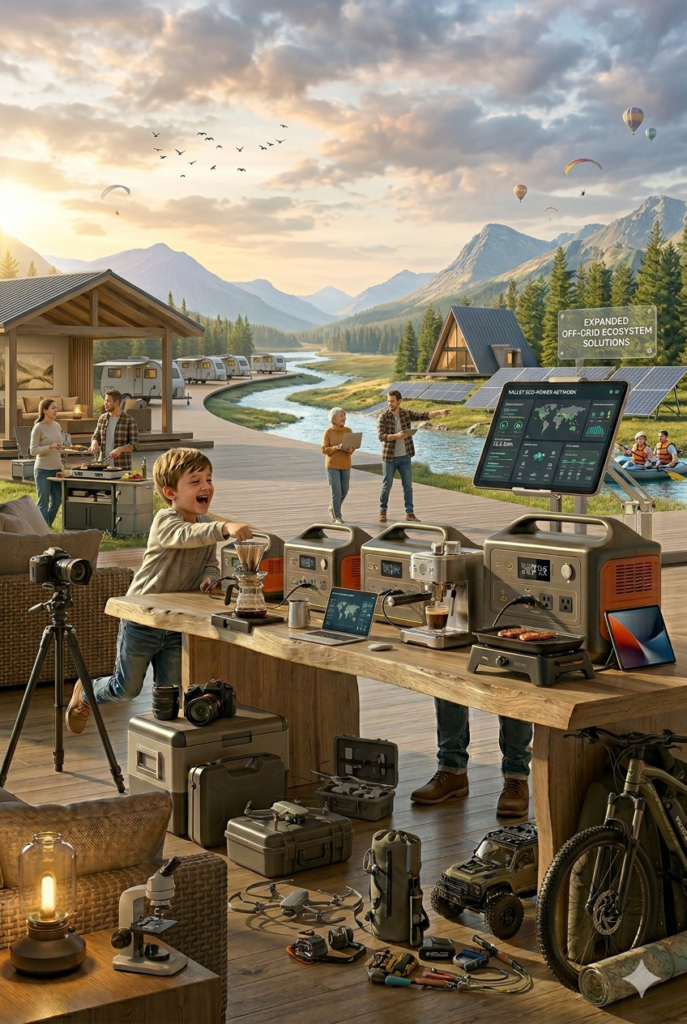
Power Without Limits. Adventure Without End.
Whether you’re chasing sunsets off-grid or powering a weekend in the wild, our portable power stations and generators keep you charged when it matters most. Reliable energy, anywhere the road takes you — so the only thing that ends is the limit on where you can go.
The Element of Rest
Where Adventure Goes, Power Follows.
Reliable, portable power that travels as far as you do. Wherever the journey leads, your energy is always one step ahead.
Power your laptop, drone, fridge, and lights from a single travel-ready hub built to keep your entire setup running, mile after mile.
Store solar by day, power your home by night — high-efficiency battery backup that turns your roof into round-the-clock energy security.
Don’t let the power run out before the adventure does — high-output generators that keep your essentials running for hours on a single tank.
Elevate Your Journey
Power Up Before You Head Out
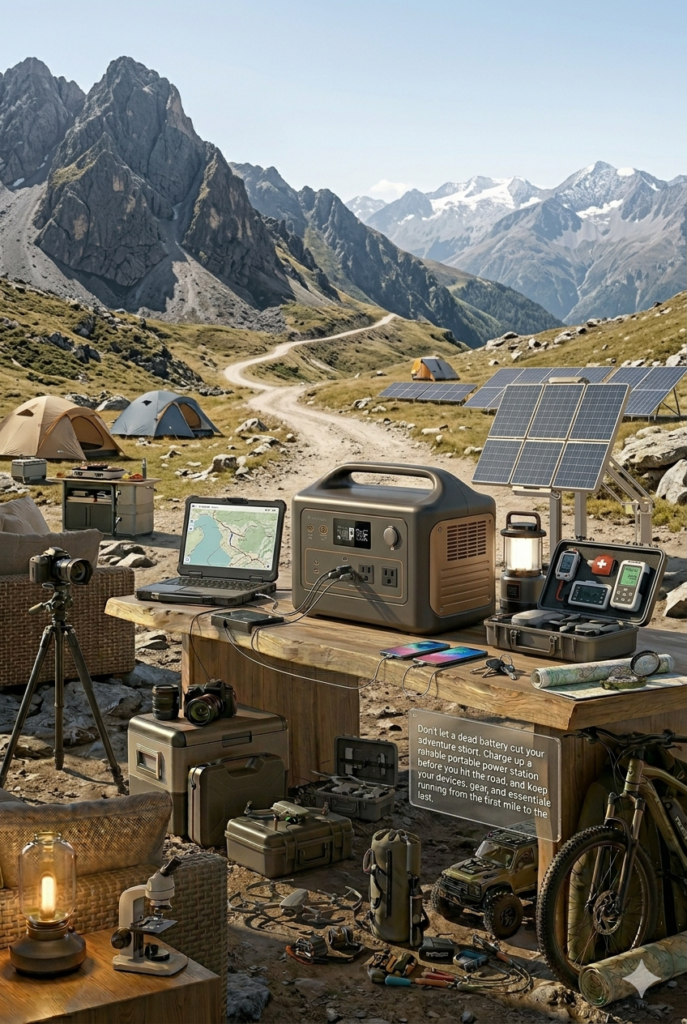
Don’t let a dead battery cut your adventure short. Charge up a reliable portable power station before you hit the road, and keep your devices, gear, and essentials running from the first mile to the last.
- Go Anywhere, Stay Powered
- Quiet, Clean, and Fume-Free
- Charge Everything You Bring
- Safe, Smart, and Built to Last
- Solar-Ready Energy Independence
Get Excited to Travel
Power Made Easy!
1
Plug In and Go
No fuel, no setup, no fuss. Just press a button and get instant, reliable power for all your devices wherever you are.
2
One Hub for Everything
Multiple AC outlets, USB ports, and DC outputs let you charge phones, laptops, cameras, and appliances all at the same time, from a single compact station.
3
Recharge Your Way
Top up from a wall outlet, your car, or solar panels — so you’re never stuck without a way to power back up, on or off the grid.
4
Safe Enough for Anywhere
Quiet, fume-free operation and smart battery protection mean you can run it indoors, in your tent, or beside the campfire with total peace of mind.
We start with real-world use, not brand claims.
We dig into the specs that actually decide outcomes.
We're reader-supported, so our loyalty is to you.
Have a power station or solar setup you swear by — or one that let you down? Tell us. Real reader experiences shape what we test next.
Frequently Asked Questions
You ask, we answer
Here’s everything you need to know about choosing, using, and getting the most out of your power stations and generators. Get clear, honest answers to the most common questions about power stations and portable generators.
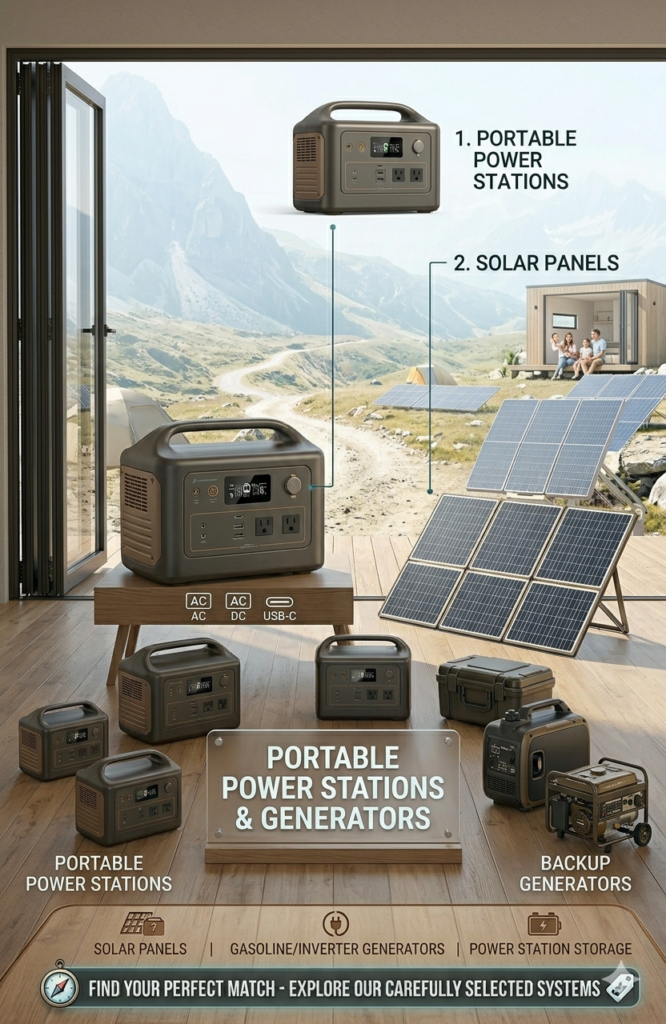
A portable power station is a battery-powered unit that stores electricity and delivers it silently with no fumes, making it safe for indoor and tent use. A generator produces power by burning fuel (gas or propane), offering higher output and longer runtime for heavy-duty needs, but with noise and emissions. Power stations suit campers and remote workers; generators suit job sites, RVs, and whole-home backup.
Add up the wattage of the devices you want to run at once, then choose a unit that comfortably exceeds that total. For phones, laptops, and lights, a 300–600Wh power station is plenty. For mini-fridges, CPAP machines, or power tools, look at 1,000Wh and up. For whole-home backup, a fuel generator or large expandable battery system is the better fit.
Yes. Because battery power stations produce no exhaust or carbon monoxide, they’re safe to use indoors, in tents, and in RVs. Fuel-burning generators, on the other hand, should never be run indoors or in enclosed spaces due to the risk of carbon monoxide poisoning.
It depends on the unit’s capacity and what you’re powering. A 500Wh station might charge a phone 40+ times or run a 50W device for around 8–10 hours. The higher the watt-hour (Wh) rating, the longer the runtime. Check the product specs and divide capacity by your device’s wattage for a rough estimate.
Most modern power stations are solar-ready and can recharge from compatible portable solar panels. This gives you a renewable, off-grid power source ideal for extended trips. Recharge time depends on panel wattage and sunlight, so pairing a higher-watt panel kit speeds things up significantly.
Smaller units handle phones, tablets, laptops, cameras, lights, and small fans. Mid-size units can run mini-fridges, CPAP machines, TVs, and drones. Large stations and generators can power refrigerators, power tools, and even some home essentials during an outage. Always check the unit’s continuous (running) and surge (peak) wattage ratings.
Quality power stations include battery management systems that protect against overheating, overcharging, and short circuits. Look for reputable brands, safety certifications, and good warranty coverage. LiFePO4 (lithium iron phosphate) batteries, in particular, offer longer lifespans and excellent safety over standard lithium-ion.
Choose a power station if you want quiet, clean, low-maintenance power for camping, travel, remote work, or indoor emergency use. Choose a generator if you need high wattage, extended runtime, or whole-home backup and don’t mind fuel and noise. Many adventurers own both — a power station for everyday trips and a generator for heavy-duty or long-outage situations.
Prices vary widely by capacity and type. Small power stations (200–500Wh) typically run from around $150–$400, mid-size units (500–1,500Wh) range from $400–$1,500, and large or expandable systems can reach $2,000+. Portable fuel generators start around $300 for basic models and climb based on wattage and inverter technology. Set your budget around the capacity you actually need rather than the highest number you can afford.
Focus on capacity (watt-hours), output (running and surge watts), and the number and types of ports. Then weigh recharge options (wall, car, solar), battery chemistry (LiFePO4 lasts longer), weight and portability, noise level, and warranty. Match these to how and where you’ll actually use the unit rather than chasing specs you won’t need.
Newsletter Sign Up
Subscribe to Our Newsletter
Don't Miss Out!
Get the latest on sales, special offer, new releases and more…