Solar Generators

Stored sunshine, ready when the power isn't.

Compare the best solar generators for backup power, camping, and off-grid living. Fuel-free, quiet, and rechargeable by sunlight — reviewed honestly.

A solar generator is a portable power station — a battery and inverter in one unit — that you recharge from the sun instead of gas. Pair it with solar panels and you’ve got quiet, fuel-free power for camping, RV trips, off-grid cabins, or keeping the essentials running at home when the grid goes down. The appeal is simple: no fumes, no noise, no fuel runs, and it’s safe to use indoors. The catch is choosing the right size, because capacity and output decide whether it powers a phone or a fridge.

This page is where we sort it out. Below you’ll find our hands-on reviews and buying guides covering portable solar generators, high-capacity home backup units, and complete panel-plus-generator kits — with honest takes on what’s worth the money and what’s overpriced. Further down, our quick “how to choose” breakdown and FAQ answer the questions buyers ask most before they spend. No hype, no spec-sheet copying — just clear guidance to help you pick power you can count on.

Solar Generators - All Posts

How to Choose the Right Solar Generator

1. Capacity (Wh)

How much it stores. Around 300Wh handles devices, 1,000Wh covers a weekend, and 2,000Wh+ suits home backup. Bigger capacity runs more for longer.

2. Output (W)

What it can run. Check continuous and surge watts against your appliances — a fridge draws far less than a kettle. Match output to your heaviest device.

3. Battery Type

How long it lasts. LiFePO4 batteries handle thousands of charge cycles and last for years; older lithium-ion fades sooner. Choose LiFePO4 whenever you can.

4. Solar Input

How fast it refills. A higher solar input means quicker recharges. Check the max solar watts and voltage so you can size your panels to match.

Frequently Asked Questions

Common Solar Generator Questions, Clear Answers.

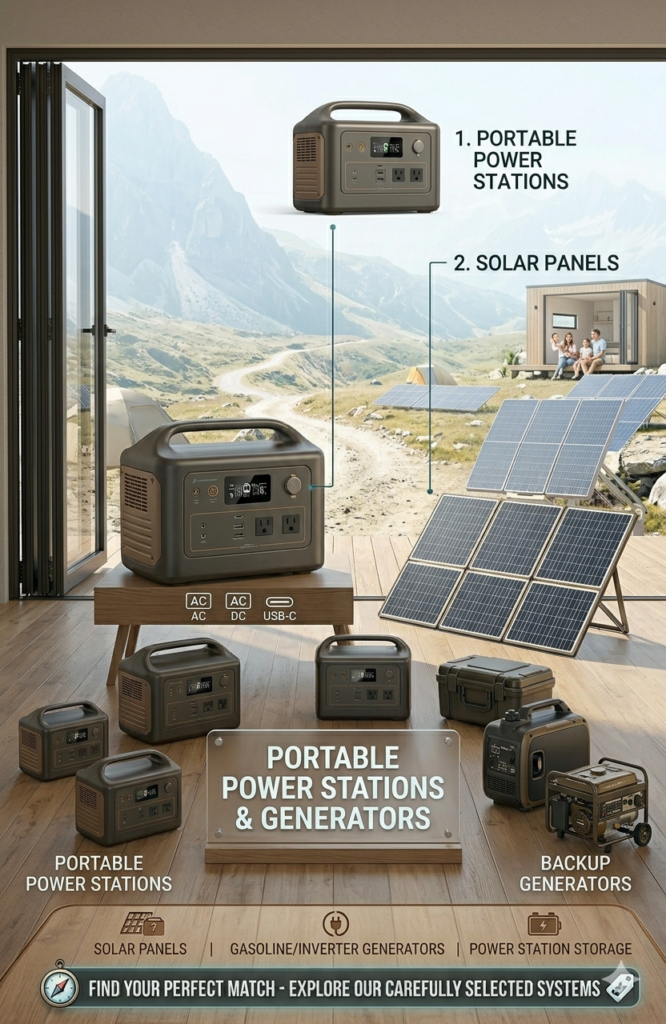
inewfinds.com portable power stations & generators

It’s a portable power station — a battery plus inverter — that recharges from solar panels instead of fuel. It stores energy and delivers it through standard outlets, USB ports, and DC sockets. Unlike a gas generator, it’s silent, emission-free, and safe to run indoors.

Roughly, a 1,000Wh unit can keep a typical fridge going for about 10–15 hours, because compressors cycle on and off rather than drawing power constantly. Larger-capacity units stretch that to a full day or more. Always check your fridge’s running wattage against the generator’s output.

For most home and recreational use, yes. They’re quiet, need no fuel, require almost no maintenance, and are safe indoors — none of which a gas generator offers. The trade-offs are a higher upfront cost and lower sustained output, so gas still wins for heavy, all-day power demands.

Usually not the entire house, but the essentials — fridge, lights, phones, Wi-Fi, and small electronics — yes. Large units with expansion batteries can run select circuits during an outage, but powering central air or electric heat across a full home is beyond most portable systems.

Yes, safely. Because it has no engine and burns no fuel, it produces no carbon monoxide or fumes — the exact hazard that makes gas generators dangerous inside. That’s one of the biggest reasons people choose solar for home backup.

The battery is the limiting part. LiFePO4 units are typically rated for several thousand charge cycles — often around ten years of regular use — while older lithium-ion batteries wear out faster. Check the manufacturer’s cycle rating and warranty before buying.

Most are water-resistant, not waterproof. The panel surface handles light rain fine, but the connectors and junction box usually aren’t built for soaking or submersion. Check the IP rating, bring them in during heavy storms, and never leave them in standing water.

It depends on the method and the unit’s capacity. From a wall outlet, many modern units fast-charge in 1–2 hours. From solar, a 1,000Wh generator paired with 200W of panels takes roughly 6–8 hours in good sun. More solar wattage and a higher solar input rating shorten that time.

Match it to your heaviest use. Around 300–500Wh covers phones, laptops, and short trips; 1,000–1,500Wh handles a weekend, a CPAP, or a mini-fridge; and 2,000Wh or more is the range for home-backup essentials. When you’re between sizes, go bigger — headroom beats running out.

Yes — most modern units support pass-through charging, so you can power devices and recharge at the same time. It’s handy for keeping a fridge running while solar tops the battery back up. Some manufacturers note it generates extra heat, so give it ventilation during heavy use.

Related Category

Newsletter Sign Up

Subscribe to Our Newsletter

Don't Miss Out!

Get the latest on sales, special offer, new releases and more…

Enter your first name.
This field is required.
Enter your last name.
This field is required.
I agree to receive emails from your company.
This field is required.
Scroll to Top