Off-Grid Energy

Energy independence, wherever you are.

 Make your own power, store it, and never depend on the grid again. Power for the cabin, the RV, the homestead, and everywhere off the beaten path.

Off-grid energy is about powering your home, cabin, RV, or remote site without relying on the utility grid — generating your own electricity, storing it, and using it on your terms. It usually combines a few pieces working together: panels or another source to make power, a battery bank to store it, and an inverter to turn it into the electricity your devices actually use. Done right, it means lower bills, true independence, and power that stays on when everyone else’s goes out.

This page is where we make the whole system make sense. Below you’ll find our hands-on reviews and guides covering batteries, inverters, charge controllers, complete off-grid kits, and the gear that ties it all together — with honest takes on what’s worth buying and what isn’t. Further down, our “how to plan it” breakdown and FAQ answer the questions people ask most before going off-grid. No hype, no jargon — just clear guidance to help you build a setup you can rely on.

Off - Grid Energy - All Posts

How to Plan an Off-Grid Energy System

1. Your Power Needs

Start here. Add up the watt-hours your devices use in a day. This number sizes everything else, so be honest about what you’ll actually run.

2. Your Energy Source

How you make power. Solar is the most common, sometimes paired with wind or a backup generator for cloudy stretches. Match the source to your climate and space.

3. Your Storage

How you keep power. Battery bank capacity decides how long you last without sun. LiFePO4 is the durable, long-cycle standard for off-grid use.

4. Your Components

How it connects. A charge controller, inverter, and proper wiring tie the system together safely. Get these right, or matched as a kit, before you scale up.

Frequently Asked Questions

Common Off-Grid Questions, Clear Answers.

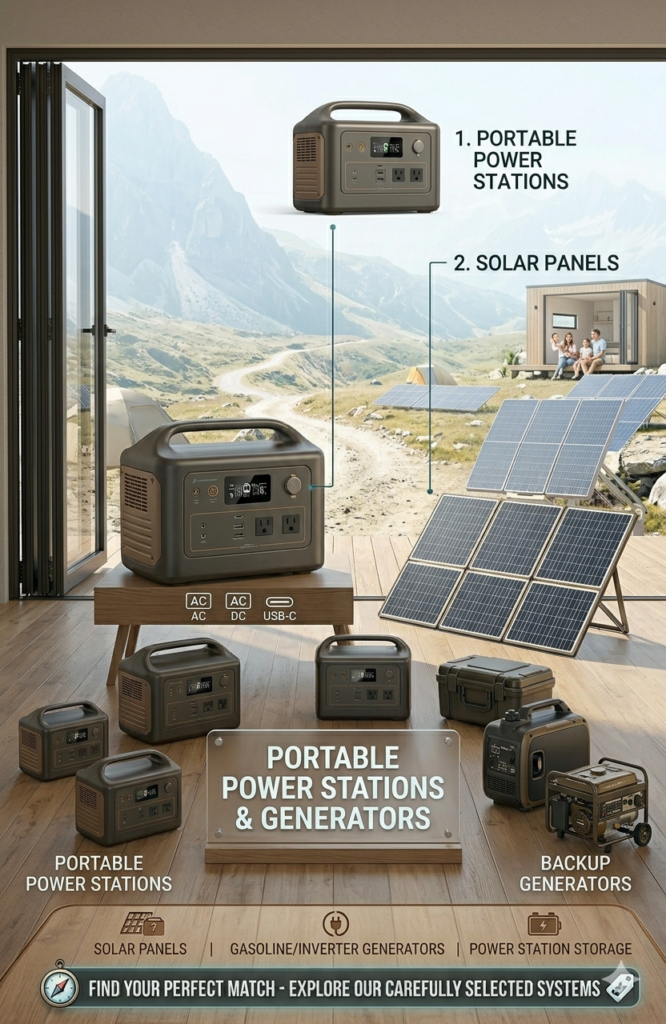
inewfinds.com portable power stations & generators

Off-grid means you’re not connected to the public utility grid — you generate, store, and use your own electricity independently. It can be full-time (a remote cabin with no utility access) or a chosen lifestyle for energy independence. The opposite is grid-tied, where you draw from and feed back to the utility.

It depends entirely on your daily usage. Add up the watt-hours your appliances consume in 24 hours, then size your battery bank to cover that (plus a buffer for cloudy days) and your panels to refill it each day. A small cabin might need a few hundred watt-hours; a full home needs many kilowatt-hours.

Yes, but it takes a properly sized system — substantial solar, a large battery bank, and an inverter rated for your loads. The bigger challenge is high-draw items like central air, electric heat, and well pumps, which require serious capacity. Many people reduce these loads or keep a backup generator for them.

A backup system kicks in only when the grid fails, then sits idle — it supplements utility power. An off-grid system is your only power source, running every day with no utility to fall back on. Off-grid setups therefore need more storage and redundancy because there’s no grid to cover the gaps.

Often, yes — as backup. Solar and batteries handle most days, but a generator covers long stretches of bad weather or unusually high demand without draining your bank. Many off-grid setups keep a generator purely as insurance, using it rarely. A fuel-free solar generator can fill a similar role for lighter needs.

LiFePO4 (lithium iron phosphate) is the standard for modern off-grid systems. It handles thousands of charge cycles, lasts roughly a decade, runs safely, and can be deeply discharged without damage. Older lead-acid batteries cost less upfront but wear out far sooner and need more maintenance.

Yes, if you’re charging batteries from solar. A charge controller regulates the power flowing from your panels into your battery bank, preventing overcharging and damage. MPPT controllers are more efficient than older PWM types, pulling more usable power from the same panels — worth it for most setups.

Over the long run it can be, but the upfront cost is high. You’re paying once for years of power instead of monthly bills, so savings depend on your usage, local electricity rates, and how long you keep the system. In remote areas where grid hookup is expensive, off-grid is often cheaper from day one.

Absolutely, and it’s often the smart way. Many people start with a portable power station and a panel, then add batteries, more panels, and an inverter over time. Building in stages spreads the cost and lets you learn your real power needs before committing to a full system.

Less than you’d expect with modern gear. Keep panels clean and unshaded, check battery health and connections periodically, and update inverter or controller settings as needed. LiFePO4 batteries are largely maintenance-free; lead-acid types need more attention. An annual once-over keeps most systems running reliably.

Related Category

Newsletter Sign Up

Subscribe to Our Newsletter

Don't Miss Out!

Get the latest on sales, special offer, new releases and more…

Enter your first name.
This field is required.
Enter your last name.
This field is required.
I agree to receive emails from your company.
This field is required.
Scroll to Top