
Solar Panels & Generators
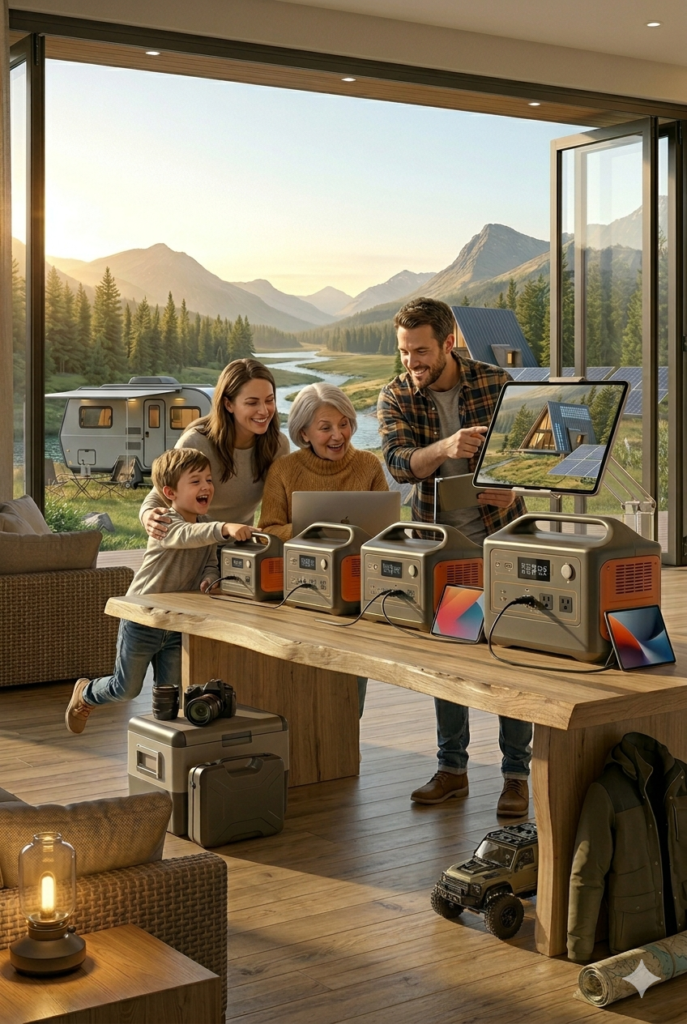
Power the Sun. Power Your Life.
Harness the power of the sun with premium solar panels and generators, delivering clean, reliable energy to fuel your home, adventures, and independence.
Fresh finds for a solar powers
Discover the elements of a solar panel & Generators
Explore how solar panels and generators work together, from photovoltaic cells and inverters to battery storage, so you can build the perfect clean energy setup for your needs.
Discover premium solar panels engineered to harness clean energy, delivering reliable power that keeps your home running while reducing your dependence on the grid.
Discover powerful solar generators engineered to store clean energy, delivering reliable backup power that keeps your home and adventures running off the grid.
Discover complete off-grid energy systems engineered to capture and store clean power, delivering true self-sufficiency for your cabin, RV, and remote living anywhere, anytime.
Invest in Your Peace of Mind
Why Use Your Solar Powers Today?
Think of traditional electricity like renting—you pay every month, the price always goes up, and you own nothing. Upgrading to solar and backup power is like buying. You lock in predictable costs, take advantage of current tax incentives, and instantly boost your home’s resale value. It’s the smartest financial move you can make for your property this year.
- Instant Utility Savings
- Maximum Tax Incentives
- Increased Property Value
- 24/7 Power Protection

The Standard Home Without Solar Powers
Grid Dependability: Total loss of power during blackouts and storms.
Rising Energy Bills: Trapped paying unpredictable, ever-increasing utility rates.
No Return on Investment: Monthly electric payments are pure expenses that build zero home equity.
Fossil Fuel Reliance: Dependent on standard grid energy, which increases your carbon footprint.
The Upgraded Home With Solar Powers
Blackout Protection: Continuous power during grid failures.
Locked-In Savings: Drastically reduced monthly bills.
Increased Equity: Higher home resale value.
Energy Independence: Clean, self-generated power.
We start with real-world use, not brand claims.
We dig into the specs that actually decide outcomes.
We're reader-supported, so our loyalty is to you.
Have a power station or solar setup you swear by — or one that let you down? Tell us. Real reader experiences shape what we test next.
Frequently Asked Questions
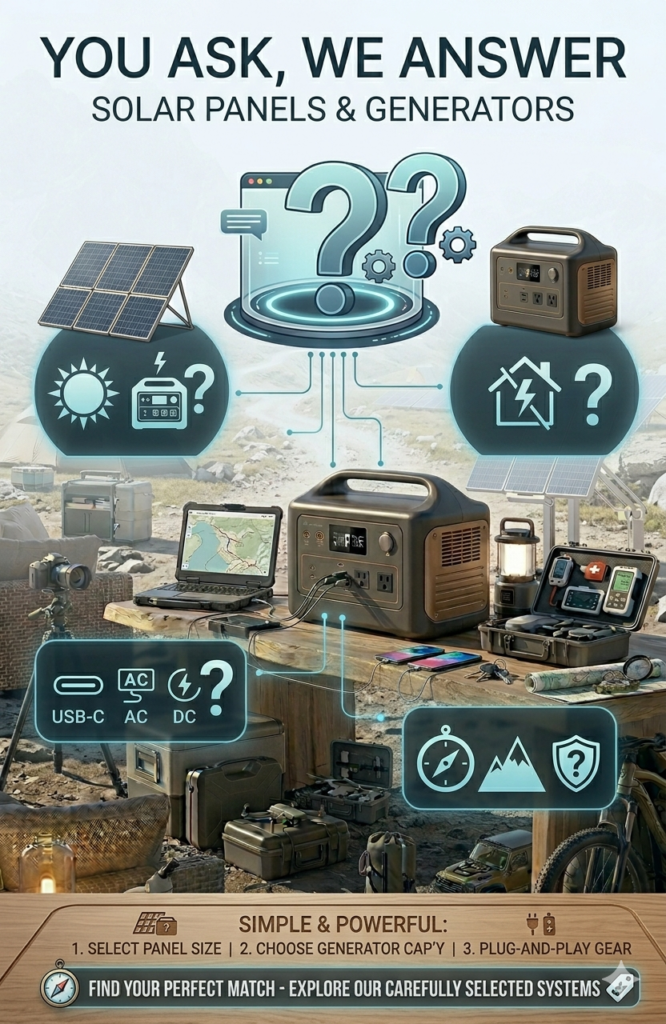
You ask, we answer
Everything you need to know before powering your adventures and home with solar panels and generators — explained simply. Real answers to real questions about solar generators, panels, pricing, and performance, so you can buy with confidence.
A portable solar panel collects energy from the sun and converts it into electricity, but it can’t store power on its own. A solar generator is the combination of a battery power station plus solar panels — the panels capture the energy and the station stores it for use anytime, day or night. You need both working together for true off-grid power.
Solar panels convert sunlight into DC electricity, which flows through a charge controller (usually built into the power station) and into the battery. Once stored, you can draw that energy through AC outlets, USB ports, or DC outputs. Pairing higher-wattage panels with a compatible station shortens recharge time considerably.
Individual portable solar panels typically range from around $100 for a small 50–100W panel to $500+ for high-output foldable kits. Complete solar generator setups (battery station plus panels) generally run from $400 for entry-level bundles to $3,000+ for large, expandable systems. Your cost depends mainly on storage capacity and total solar wattage.
For anyone who values quiet, fuel-free, renewable power, yes. They cost more upfront than fuel generators but have no ongoing fuel expense, near-zero maintenance, and silent, emission-free operation. If you camp often, work remotely, or want clean emergency backup, the long-term savings and convenience usually justify the investment.
Yes, but at reduced output. Solar panels still generate power in overcast conditions — typically 10–25% of their rated capacity — so charging will be slower. For reliable off-grid use, it’s smart to size up your panels or keep an alternate charging method (wall or car) as backup for stretches of poor weather.
Quality panels are built for rugged outdoor life, with weather-resistant materials and protective coatings. Many foldable panels carry an IP rating for water and dust resistance. While the panels themselves handle sun and light rain well, most aren’t fully waterproof, so it’s best to shelter the connection ports and bring them in during heavy storms.
Smaller units are designed for devices and essentials rather than an entire house. However, large, expandable solar generator systems can run key circuits — fridge, lights, Wi-Fi, and medical devices — during an outage. For full whole-home backup, you’d need a high-capacity system with sufficient panels, or a dedicated home battery and fuel generator combination.
Prioritize battery capacity (watt-hours), output (running and surge watts), panel wattage, and recharge speed. Then consider battery chemistry (LiFePO4 lasts longest), portability and weight, port variety, expandability, and warranty. Match these to your real-world use rather than chasing the biggest numbers on the spec sheet.
It varies. Some brands sell complete bundles (station plus panels), while others sell the components separately so you can customize your setup. Bundles are simpler and often better value for beginners; buying separately lets you scale panels and storage to your exact needs. Always confirm the panels are compatible with your station’s input.
Quality solar panels often last 20–25 years with gradual efficiency loss over time. The battery in a solar generator is the shorter-lived component — LiFePO4 batteries typically deliver 2,000–4,000+ charge cycles, or roughly 10 years of regular use. A strong warranty on both the panels and the battery is a good indicator of expected lifespan.
Newsletter Sign Up
Subscribe to Our Newsletter
Don't Miss Out!
Get the latest on sales, special offer, new releases and more…